English
  English
 русский
 日本語
日本語 Español
 中文简体
中文简体
If a process line holds at 180 °C and someone is still quoting a self-regulating tape for it, that quote will not survive its first winter. Above roughly 120 °C to 150 °C, the practical answer is almost always a constant-wattage, mineral-insulated or skin-effect heating cable, because those designs keep useful output at high temperature without the polymer core that limits self-regulating products.
Choosing a high temperature heating cable for industrial use comes down to four decisions, taken in a fixed order: the maximum exposure temperature, the watt density needed at that temperature, the sheath and insulation materials that survive the local environment, and only then the control and certification package around the cable. Reverse the order and you usually end up with one of two expensive mistakes, a cable that cannot hold temperature on the coldest night of the year, or one that looks safe on paper but corrodes through its jacket in eighteen months.
Content
- Fix Four Numbers Before You Compare Any Cable
- Match the Cable Family to Your Temperature Band
- Mineral Insulated Cable: When Temperature and Environment Are Both Hostile
- Skin Effect Systems: The Economic Choice for Very Long Lines
- Voltage, Watt Density and Circuit Length Decide the Real Output
- Controls, Sensors and Hazardous-Area Certification
- Insulation, Installation and Commissioning Checks
- Frequently Asked Questions
Fix Four Numbers Before You Compare Any Cable
Every credible selection starts with four numbers, and none of them is the cable price. Write them down before you open a single datasheet.
- Maintain temperature — the temperature the pipe or tank must stay at, not the temperature you hope to reach.
- Maximum exposure temperature — includes steam-out, cleaning cycles and any upset condition. This number, not the maintain temperature, selects the cable family.
- Minimum ambient temperature — normally the winter design condition, and the number that drives start-up power demand.
- Supply voltage and phase — the same cable on 220 V and 380 V produces completely different watts per metre.
Sizing on maintain temperature alone is the most common error. A line that holds 80 °C but is steam-cleaned at 150 °C needs a cable rated for 150 °C or more, even though normal duty is mild.
| Cable family | Typical maintain range | Output behaviour | Where it fits best |
|---|---|---|---|
| Self-regulating (polymer) | Up to about 120–150 °C | Falls as temperature rises; self-limiting | Freeze protection, short and medium runs, field-cut lengths |
| Power-limiting | About 120–200 °C | More stable than self-regulating across ambient swings | Process lines with variable ambient conditions |
| Constant wattage (polymer insulated) | About 150–200 °C | Fixed watts per metre, independent of temperature | Long straight runs, tanks, predictable loads |
| Constant wattage (high-temperature, carbon fibre) | Roughly 250 °C and above | Fixed, high watts per metre | High-temperature process pipe and equipment |
| Mineral insulated (MI) | Up to about 600 °C | Very high and constant; metal sheath | Harsh, high-temperature, high-watt-density duty |
| Skin effect | About 200–250 °C | Constant output distributed along a long pipe | Very long pipelines covered by one or few circuits |
Match the Cable Family to Your Temperature Band
The temperature band eliminates most of the catalogue before price even enters the conversation.
Self-Regulating Cable: Strong Below 120 °C, Weak Above It
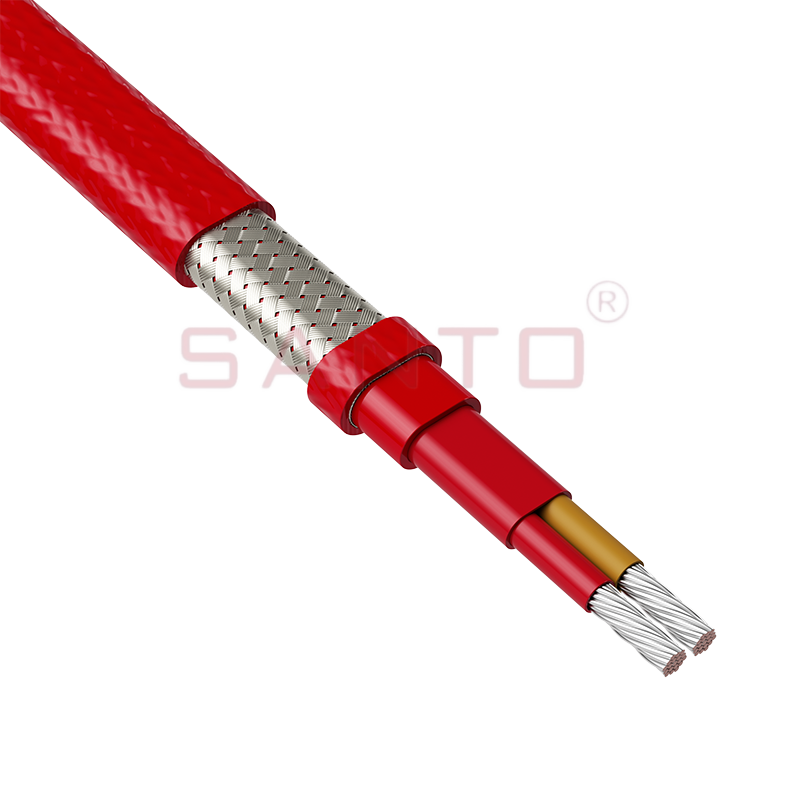
Self-regulating cable earns its reputation on freeze protection and it should stay there. Its conductive polymer core reduces output as it warms, so a crossed cable cannot easily overheat and the tape can be cut to length on site. That convenience is exactly why it gets misapplied. Push a polymer-cored cable toward its ceiling and output collapses just when the plant needs it, while the polymer ages faster under sustained heat.
Constant Wattage and Power-Limiting Cable: Stable Output for Process Heat
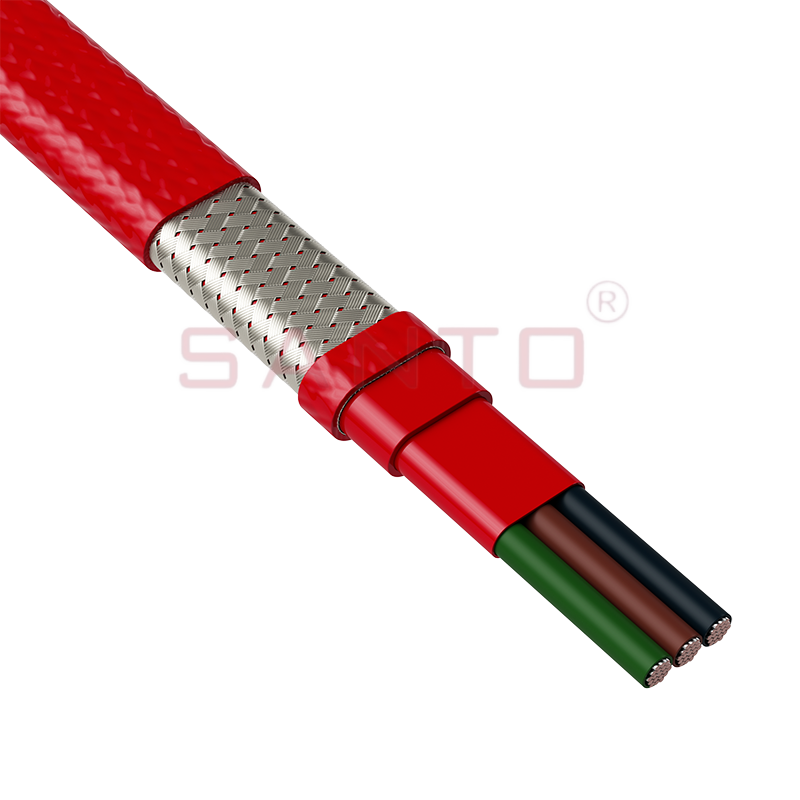
Constant wattage cable delivers a fixed watts per metre no matter how hot the pipe becomes, so a January cold start produces the same output as a mild April afternoon. That predictability is what process engineers want, and it is why constant wattage designs dominate high-temperature line heating. The trade-off is genuine: because output does not fall with temperature, a constant wattage circuit can overheat if it is overlapped, over-insulated or run without a thermostat. Power-limiting versions sit between the two families, holding steadier output than self-regulating tape while still moderating as ambient conditions change.
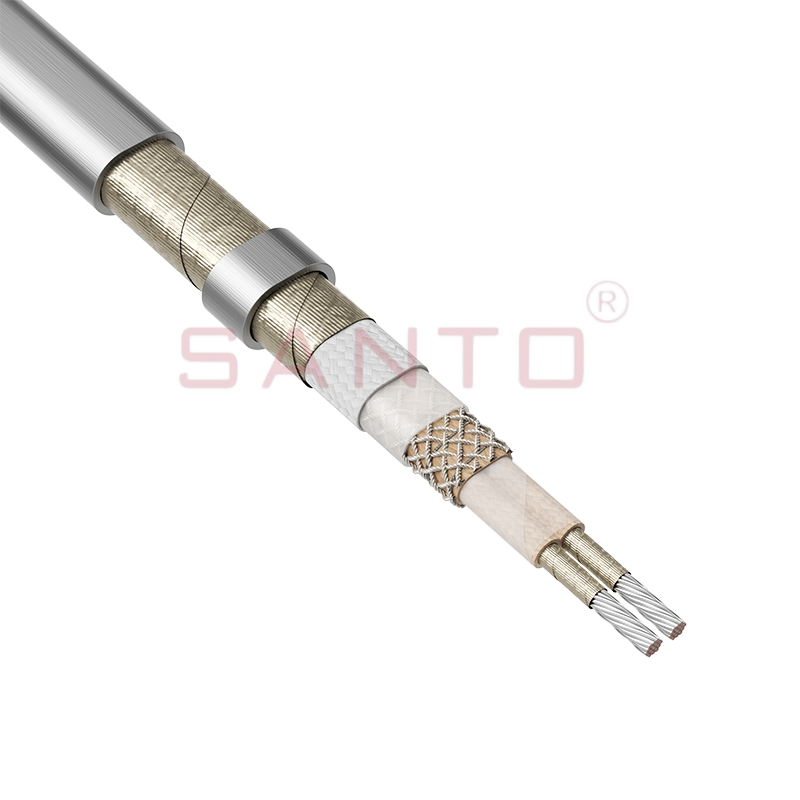
For carbon-fibre high-temperature variants, the working ceiling of the cable matters far more than the marketing headline. A detailed review of high-temperature constant power heating cable performance is a sensible next step if you are weighing constant wattage against skin effect for a long line.
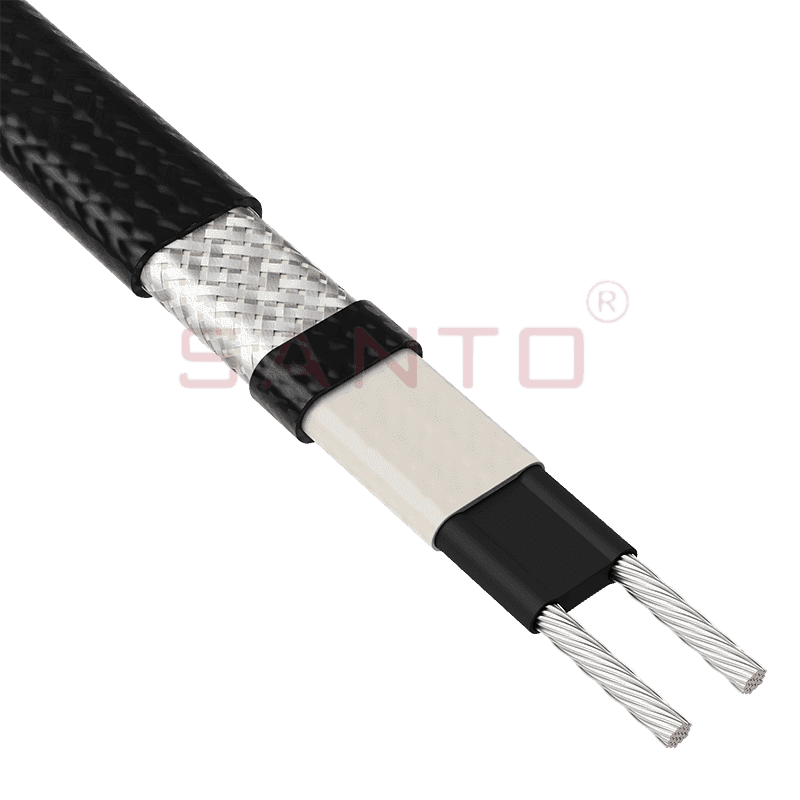
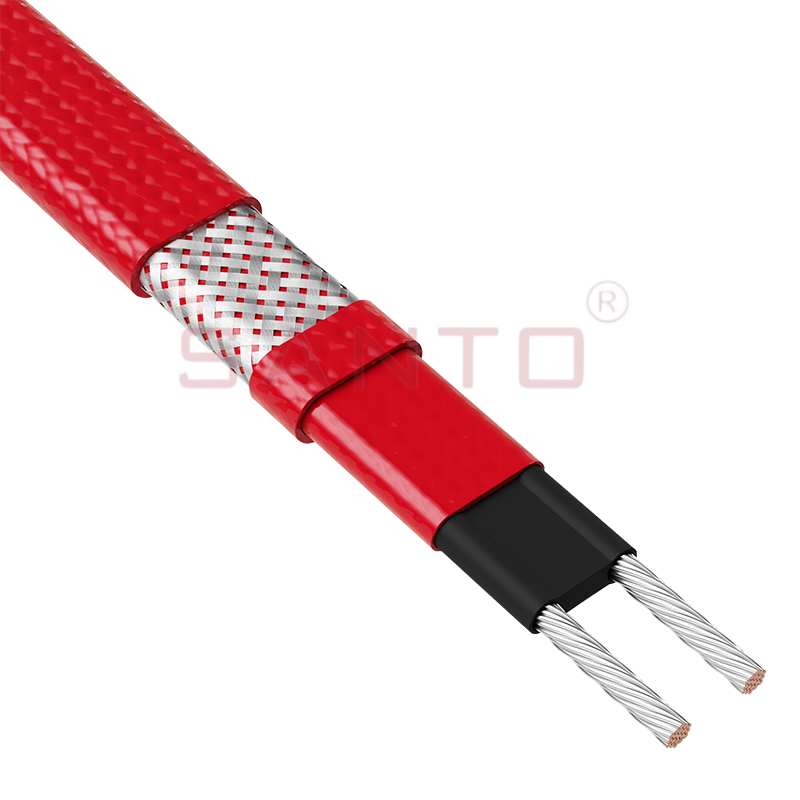
 AFF-CT High-Temperature Carbon Fiber Constant Power Heating CableParallel constant power cable for high-temperature process maintenance, steam-cleaned pipes and hazardous areas, with high power output and long circuit options.View Product →
Mineral Insulated Cable: When Temperature and Environment Are Both Hostile
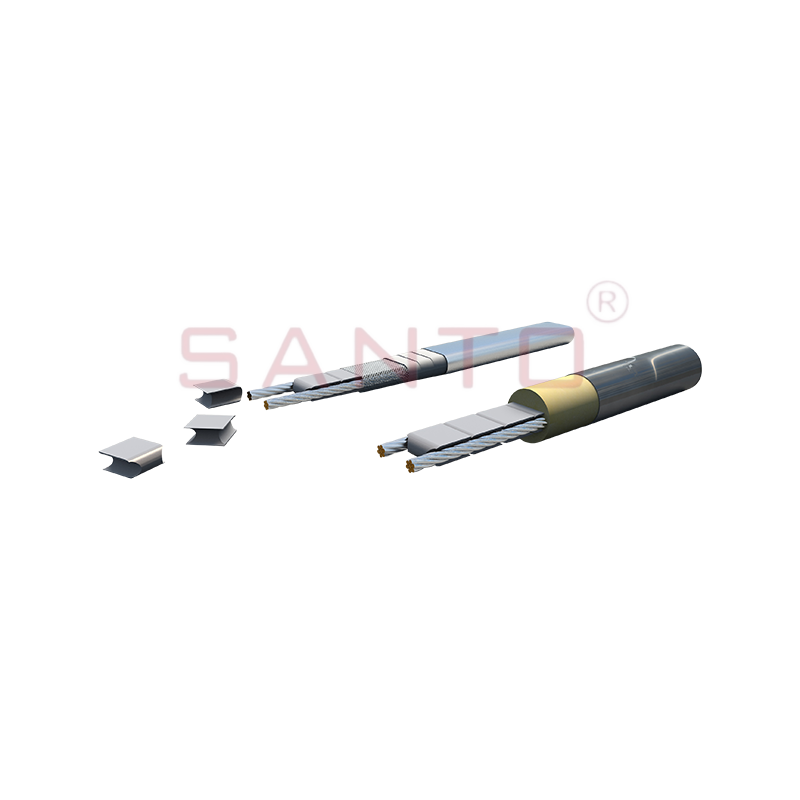
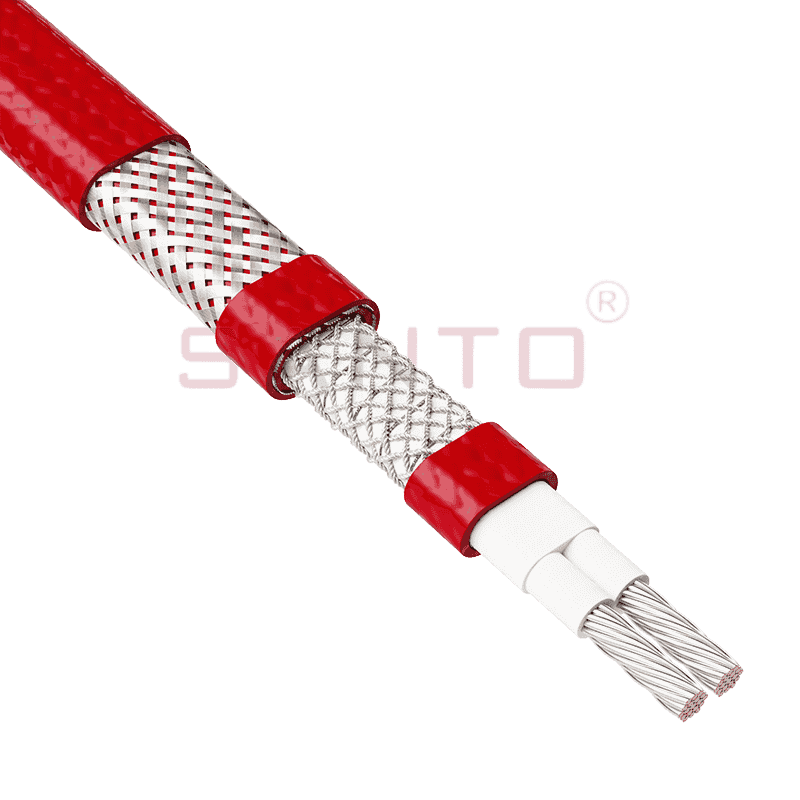
Once exposure temperature passes roughly 250 °C, or the location combines heat with steam, solvents or mechanical abuse, mineral insulated cable is usually the right answer. A magnesium oxide core inside a metal sheath has no polymer to degrade, so output stays high and constant.
- 321 stainless steel sheath — a solid general-purpose choice for high-temperature lines where corrosion is mild.
- Alloy 825 sheath — the pick when chlorides, acids or coastal and offshore atmospheres attack standard stainless steel.
- Components and terminations — cold leads, junction boxes and sealing kits matter as much as the cable, because MI terminations are where moisture gets in.
MI cable normally ships in fixed factory lengths and cannot be cut in the field, so the circuit layout, cold lead positions and junction box locations must all be settled before the order is placed.
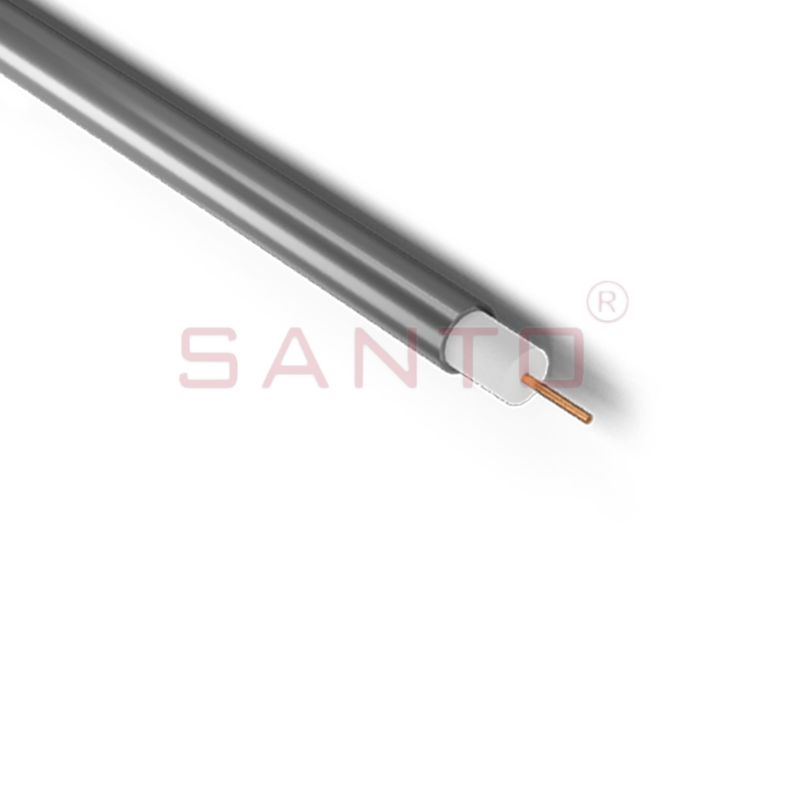
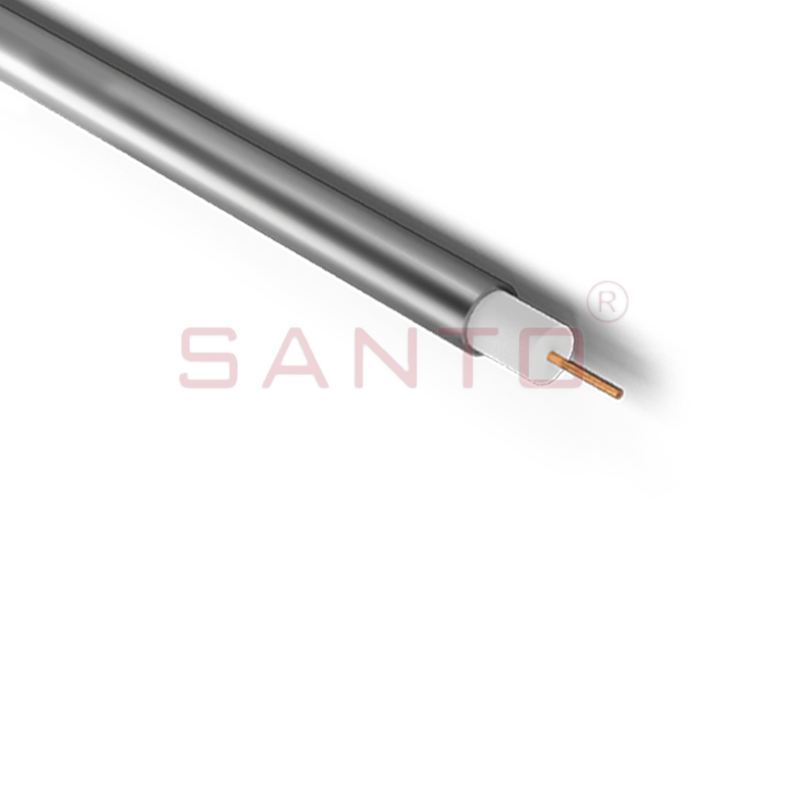 MI Heating Cable with 321 Stainless Steel SheathMineral-insulated heat tracing cable for harsh industrial environments, offering 600°C sheath temperature, corrosion resistance, mechanical strength and fire-resistant safety.View Product →
Skin Effect Systems: The Economic Choice for Very Long Lines
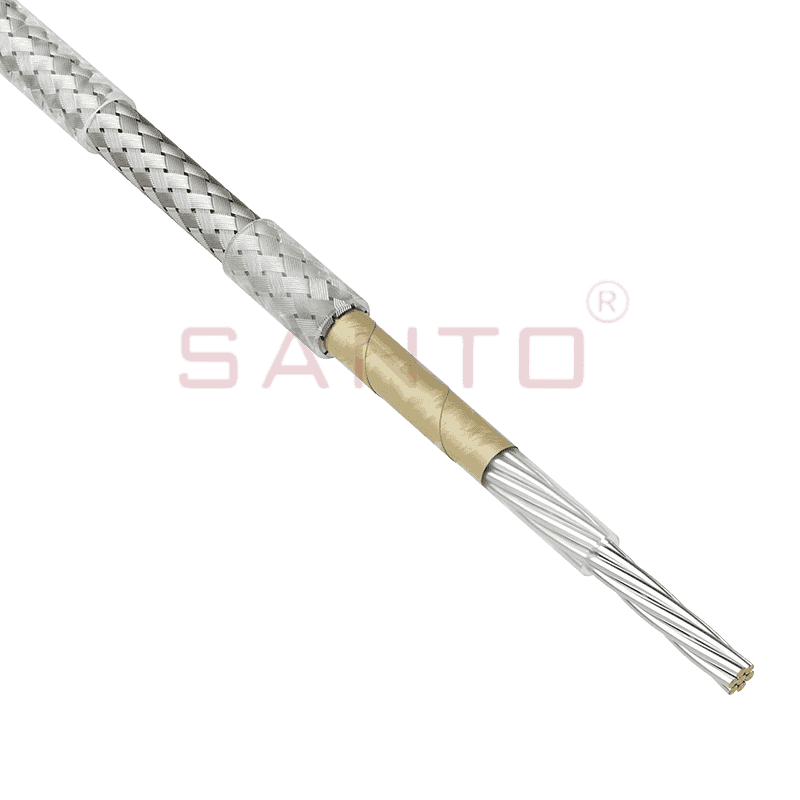
On a pipeline measured in kilometres, the deciding cost is not cable price per metre but how many circuits, transformers and junction boxes the design demands. Skin effect tracing uses the pipe wall itself as the return path for a high-frequency current, concentrating heat at the pipe surface and keeping voltage drop manageable over distances that would force dozens of parallel constant-wattage circuits.
Above roughly one kilometre per circuit, skin effect is normally the cheaper and more maintainable option, particularly for buried or elevated pipelines in oil, gas and petrochemical service where access is difficult.
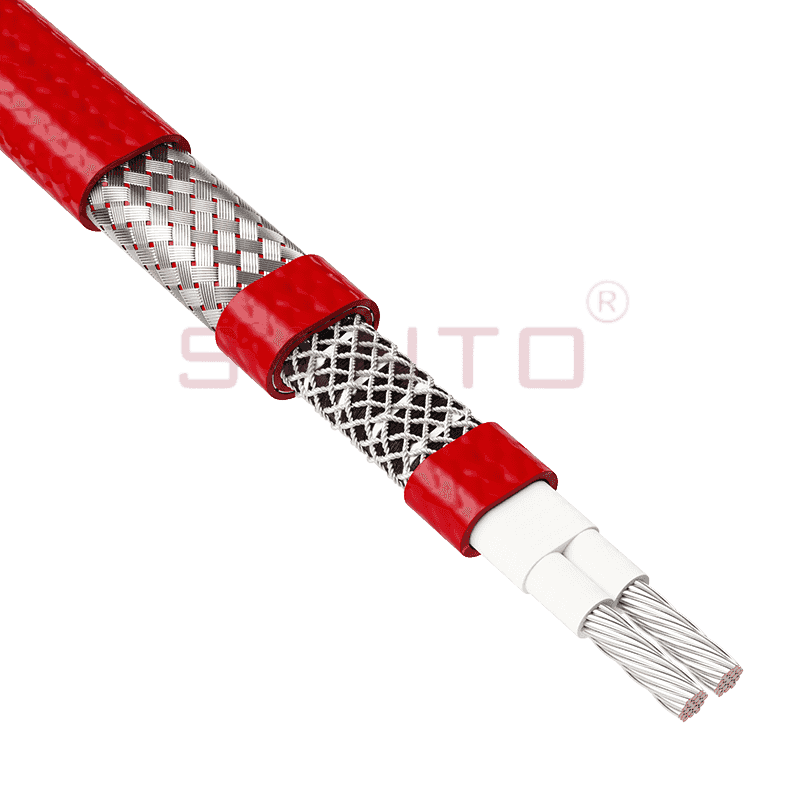
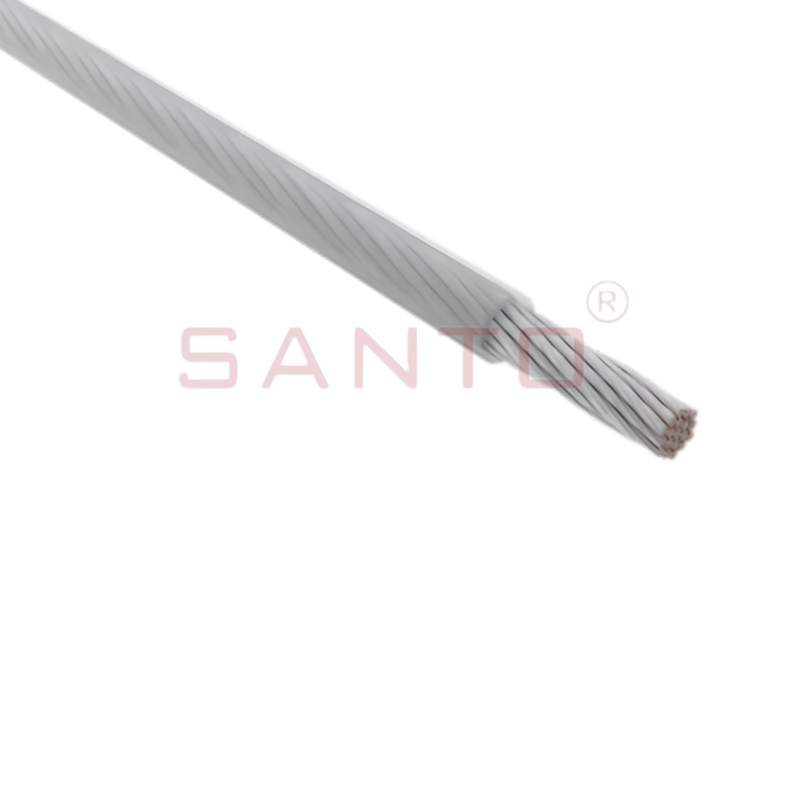 STS HT Skin-Effect Tracing Wire for Long PipelinesSkin-effect tracing wire using a ferromagnetic heat tube for efficient heat transfer on long pipelines, with electrically safe operation and low outer-wall voltage.View Product →
Voltage, Watt Density and Circuit Length Decide the Real Output
A cable's nameplate watts per metre is measured at a nominal voltage on a nominal pipe. Real installations rarely match, and that gap explains most under-performing systems.
- Voltage drop: long cold leads can cut the voltage a cable actually sees, reducing output well below the datasheet figure.
- Watt density: higher watts per metre gives faster recovery but raises sheath temperature; match it to the fluid and the allowable pipe skin temperature.
- Circuit length: constant wattage circuits have a maximum length set by voltage drop and current. Exceed it and you add circuits, junction boxes and failure points.
- Insulation: insulation thickness and conductivity change heat loss more than most cable choices do. A well-insulated line can drop an entire cable family from the specification.
Controls, Sensors and Hazardous-Area Certification
Once the cable family is fixed, the control layer decides whether the system actually holds temperature in service. A constant wattage circuit without a thermostat is a runaway waiting for a shutdown.
- Select thermostats with a sensing range that brackets the maintain temperature with margin at both ends.
- Surface-sensing thermostats suit tanks and short lines; pipeline induction sensors suit long runs where one surface point is not representative.
- In classified areas, the thermostat, sensor, junction box and terminations all need suitable certification — the cable rating alone is not enough.
- Sensors rated to 482 °C and explosion-proof controllers exist for exactly these high-temperature duties.
If the project involves a classified area or an unusual temperature window, it is worth discussing the details with the supplier's engineers before the bill of materials is frozen.
Insulation, Installation and Commissioning Checks
The best cable still fails when the installation details are wrong. Three points catch most of the trouble.
- Never overlap constant wattage cable. Self-regulating tape tolerates crossings; constant wattage cable does not, because its output does not fall with temperature.
- Keep the cable in contact with the pipe and fix it properly. Foil tape spreads heat, pressure-sensitive tape and cable ties hold position, and both matter on vertical runs.
- Insulate, weatherproof and label. Every circuit needs an identification label and a commissioning record with insulation resistance and start-up current readings.
Record the baseline current for each circuit. It is the fastest way to spot a failing high-temperature circuit two winters later, when the pipe is cold and the plant cannot stop.
Frequently Asked Questions
Can I use self-regulating cable for a 200 °C application?
Generally no. Standard self-regulating products lose most of their output well before that point, and sustained operation near their limit shortens service life. Above roughly 120–150 °C, move to a constant wattage, MI or skin effect design.
Does higher watts per metre always mean better performance?
No. Higher watt density raises sheath surface temperature and the risk of coking or degrading the process fluid. Size watt density from the real heat loss after insulation, plus a sensible start-up margin.
Do I still need a thermostat with constant wattage cable?
Yes. Constant wattage cable does not self-limit, so a thermostat or controller is required for both temperature control and over-temperature protection.
What sheath should I choose for an outdoor or coastal site?
Stainless steel 321 handles mild conditions, but chlorides and marine atmospheres usually justify an Alloy 825 sheath or an equivalent corrosion-resistant construction.
Get the temperature band right and half of the selection is already finished. Confirm the maintain and exposure temperatures, size watt density against a properly insulated line, choose a sheath that survives the site, and only then specify the controls and certifications around it. Done in that order, a high temperature heating cable specification survives its first winter, its first steam-out and its first maintenance shutdown.