English
 English
 русский
 日本語
 Español
 中文简体

You can narrow almost every hazardous-area heating cable decision to four questions: what the area classification allows, what temperature class the cable must stay under, what duty it has to perform, and whether the terminations and controls carry the same approval as the cable. Answer them in that order and the shortlist usually drops to two or three candidates.
A 6-inch condensate line makes the point. It needs an 80 °C maintain temperature, sees a 150 °C steam-out twice a year, sits in a Zone 1 area with a IIB gas group and a T3 class, and runs 320 m. Change one fact and the answer changes. Raise the steam-out to 200 °C and mineral-insulated cable becomes the only safe option. Stretch the run to 3 km and skin-effect tracing starts to compete.
Content
- The Four Decisions, in the Order That Matters
- Step 1: Read Area Classification and Temperature Class Together
- Step 2: Match the Cable Family to the Duty
- Step 3: Sheath, Braid and the Corrosion Question
- Step 4: Terminations, Controls and Ground-Fault Protection
- Commissioning and Maintenance Checks That Catch Real Problems
- Frequently Asked Questions
The Four Decisions, in the Order That Matters
Apply these four filters before you open a catalogue, because each one removes options rather than adding them.
- Area classification and gas or dust group. Zone 1, Zone 2, the group and the dust rating decide what may be installed at all.
- Temperature class and maximum process temperature. This sets the surface temperature ceiling for the cable sheath, not only for the pipe.
- Duty. Maintain temperature, pipe size, insulation, ambient, supply voltage and run length set the watts per metre you actually need.
- System hardware. Cold leads, junction boxes, thermostats, sensors and ground-fault protection decide whether the approval survives installation.
Reverse the order and you get the classic project failure: cable bought on price, then a redesign six weeks before start-up because the junction box was IP66 rather than Ex e.
Step 1: Read Area Classification and Temperature Class Together
Zone and Division describe the same risk with different paperwork
IEC and ATEX practice divides a plant into zones, while North America uses divisions. Zone 1 broadly equals Class I, Division 1, and Zone 2 equals Division 2. The practical consequence is simple: a cable certified for Division 2 will not satisfy a Zone 1 specification, even though the two descriptions sound interchangeable in a tender document.
| Location (IEC / ATEX) | North American equivalent | What it means for heat tracing |
|---|---|---|
| Zone 0 | Class I, Division 1 (rare) | Tracing normally excluded; intrinsically safe circuits only |
| Zone 1 | Class I, Division 1 | Ex e or Ex d tracing with certified terminations; most petrochemical lines |
| Zone 2 | Class I, Division 2 | Lower protection level accepted; the fault window is short, not zero |
| Zone 21 / 22 | Class II, Division 1 / 2 | Dust-tight enclosures plus surface temperature control |
The temperature class is a surface limit, not a product rating
The temperature class of the gas or dust present caps the surface temperature of everything installed inside the area: 450 °C for T1, 300 °C for T2, 200 °C for T3, 135 °C for T4, 100 °C for T5 and 85 °C for T6. Sheath temperature is set by whichever is hotter, the process fluid or the cable's own output, and that is where most projects get caught.
- A 100 °C line in a T4 (135 °C) area leaves only 35 °C of headroom.
- A 150 °C steam-out cycle rules out any cable rated T5 or T6.
- A controlled design, where a thermostat or limiter stops the cable reaching its maximum, is often the only way to keep high-output cable inside a low temperature class.
For the failure modes that certification alone does not prevent, read our note on whether self-regulating heating cables are safe for use in hazardous areas.
Step 2: Match the Cable Family to the Duty
For most Zone 1 pipework below 150 °C, self-regulating or power-limiting tape is the cheapest compliant answer. Above that, or where the atmosphere attacks polymers, mineral-insulated cable wins. On pipelines several kilometres long, skin-effect tracing is the only practical choice.
| Cable family | Typical maintain range | Cut to length on site | Best fit |
|---|---|---|---|
| Self-regulating | Frost protection to 120 to 150 °C | Yes | Zone 1 or 2 pipe, tank and instrument lines |
| Power-limiting | About 110 to 150 °C | Yes | Medium-length lines needing higher output density |
| Constant wattage | 150 to 250 °C and above | Parallel yes, series no | High-temperature lines with a controlled design |
| Mineral-insulated | 400 °C and above | No, factory lengths | High temperature, corrosion, mechanical abuse |
| Skin-effect | Long lines, up to about 200 °C | No | Pipelines several kilometres long |
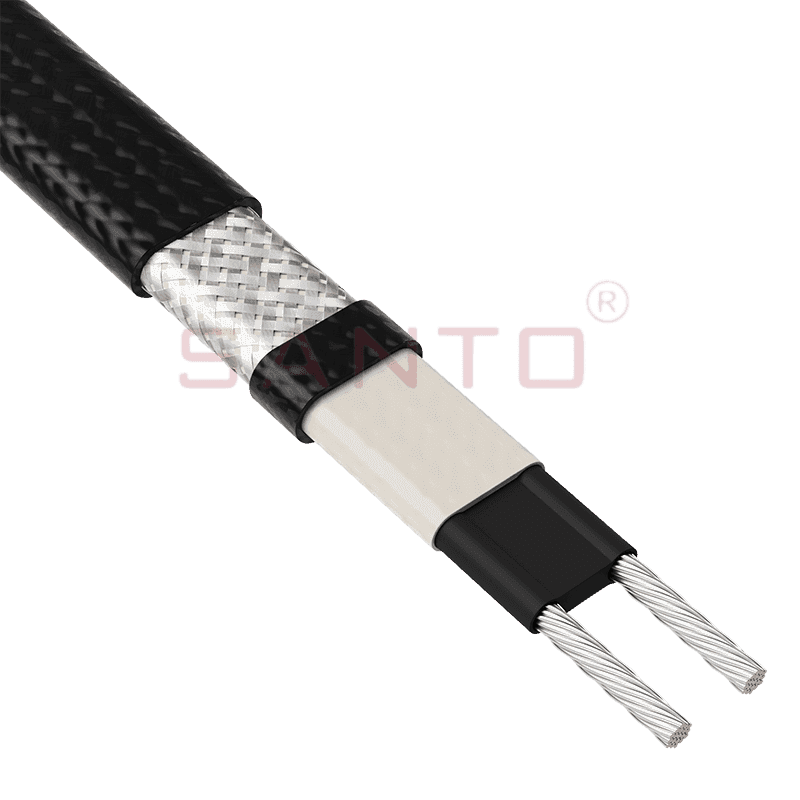
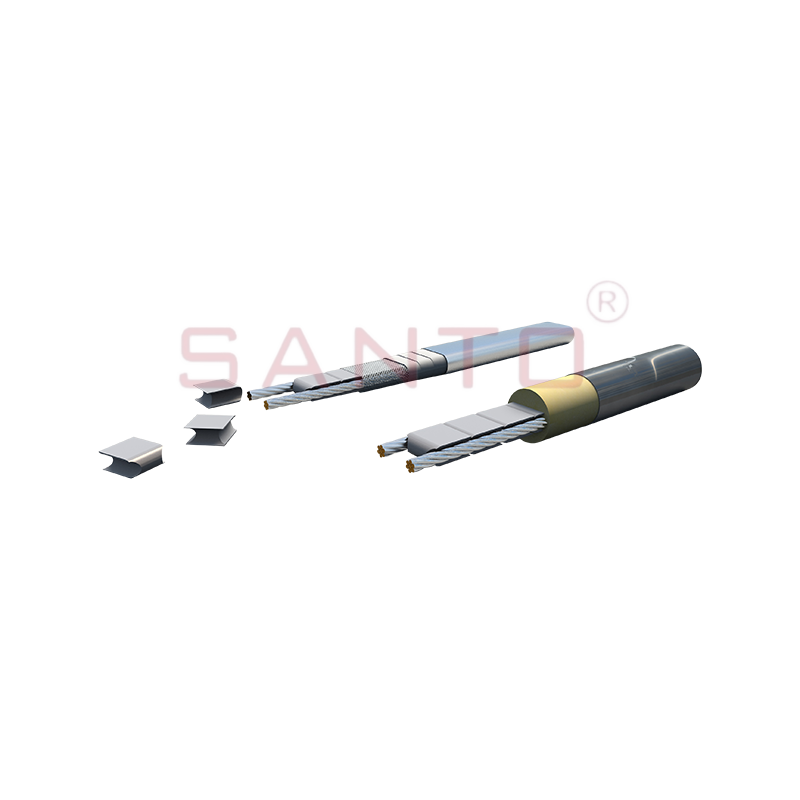
Power-limiting cable such as the ACCCT series sits between the two extremes: its output is far more stable than self-regulating tape, and it can still be cut to length on site, which matters when a line is modified during construction.
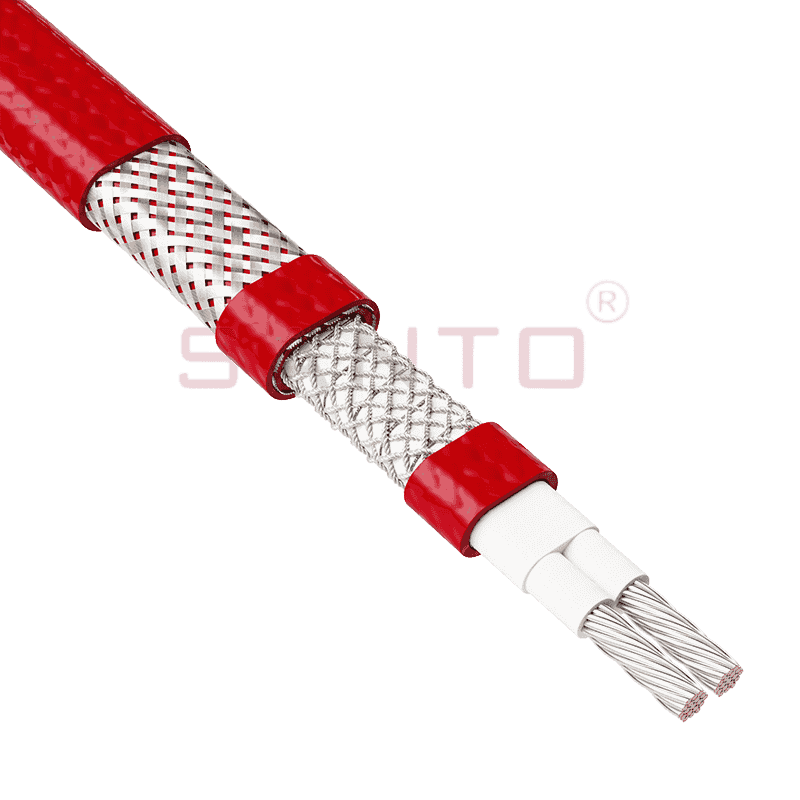 ACC-CT Power-Limiting Heat Tracing Cables for Process LinesStable power-limiting output, field cut-to-length flexibility, and chemical-resistant jackets suit process temperature maintenance and frost protection on modified lines.View Product →
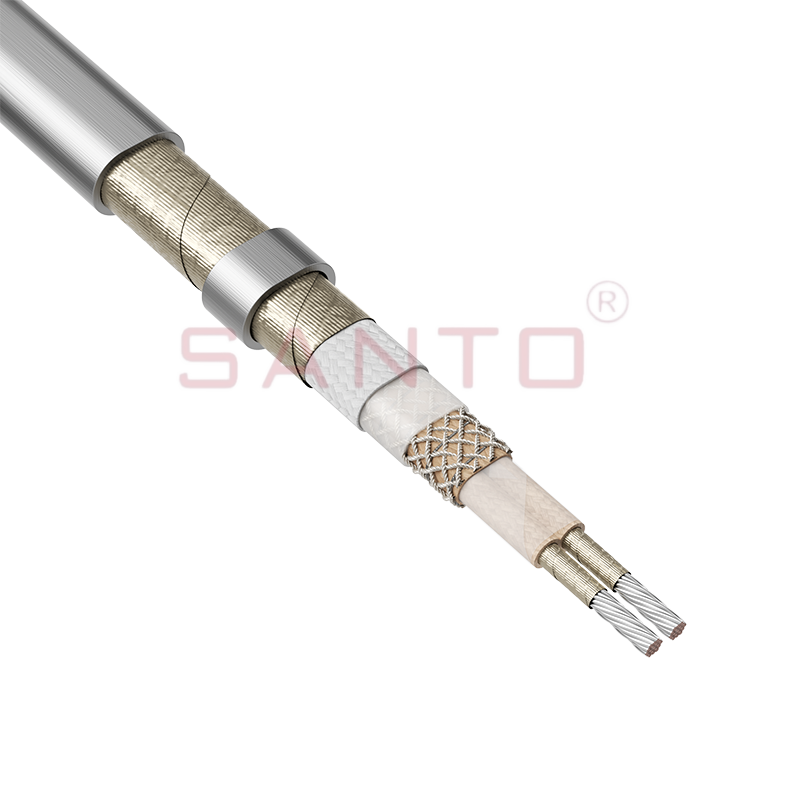
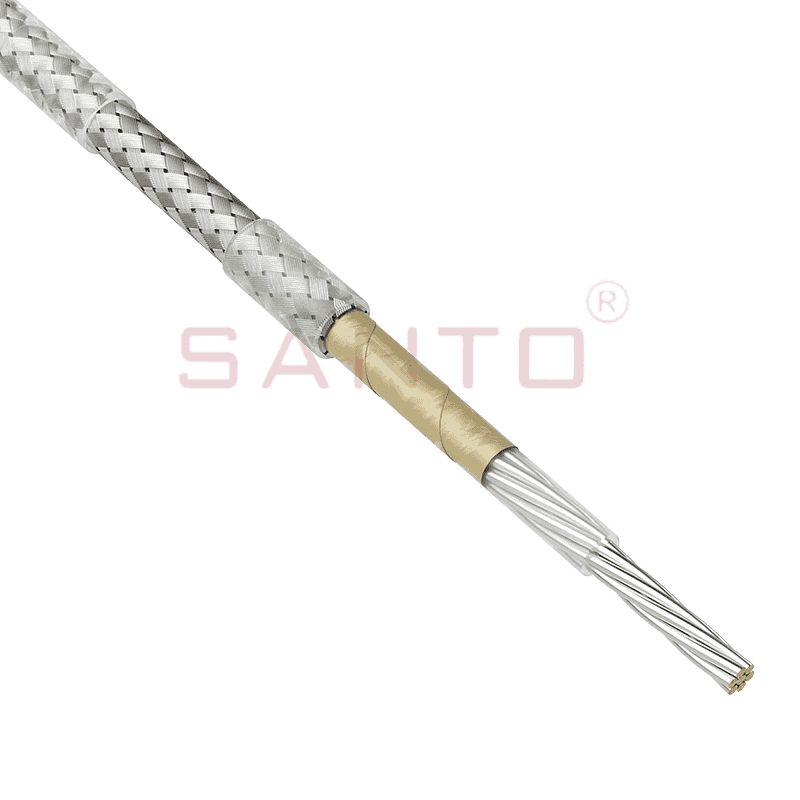
Mineral-insulated cable is the fallback that often becomes the first choice on hot or mechanically exposed lines, because it tolerates sheath temperatures no polymer can reach and its metal sheath gives the conductor real mechanical protection.
Step 3: Sheath, Braid and the Corrosion Question
Polymer jackets are not interchangeable
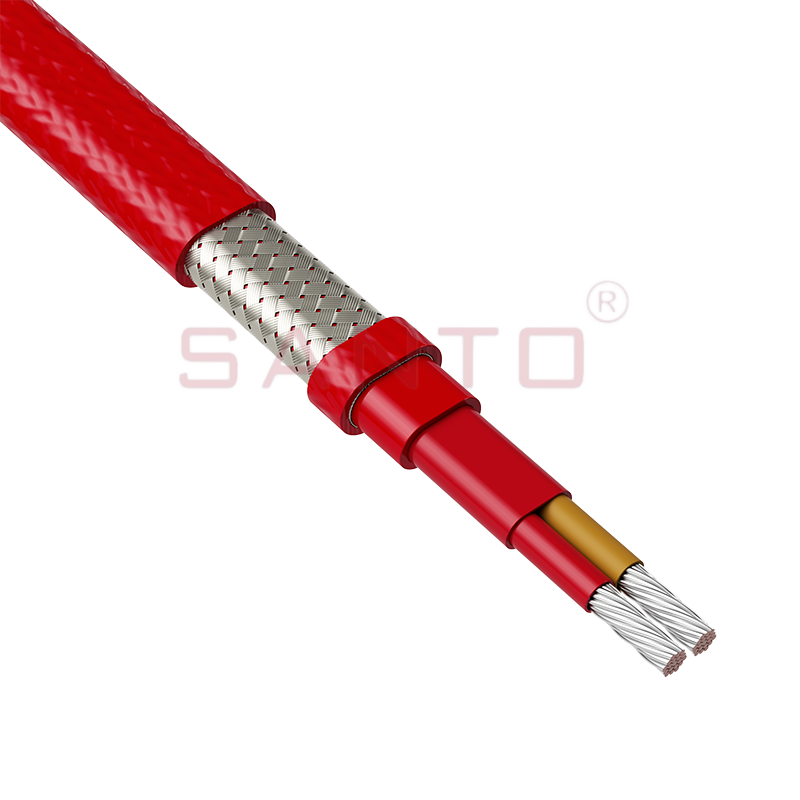
Standard PVC jackets belong on domestic frost protection, not in a process unit. Fluoropolymer jackets resist hydrocarbons and most solvents, but they still soften at high temperature and some aromatics permeate them over years of service.
Metal sheaths exist because some atmospheres eat polymers
Offshore platforms, chloride-rich cooling water areas and sour service destroy stainless steel braid quickly, which is why Alloy 825 sheathing exists. On a chloride-limited specification the sheath choice is a corrosion decision, not a marketing one.
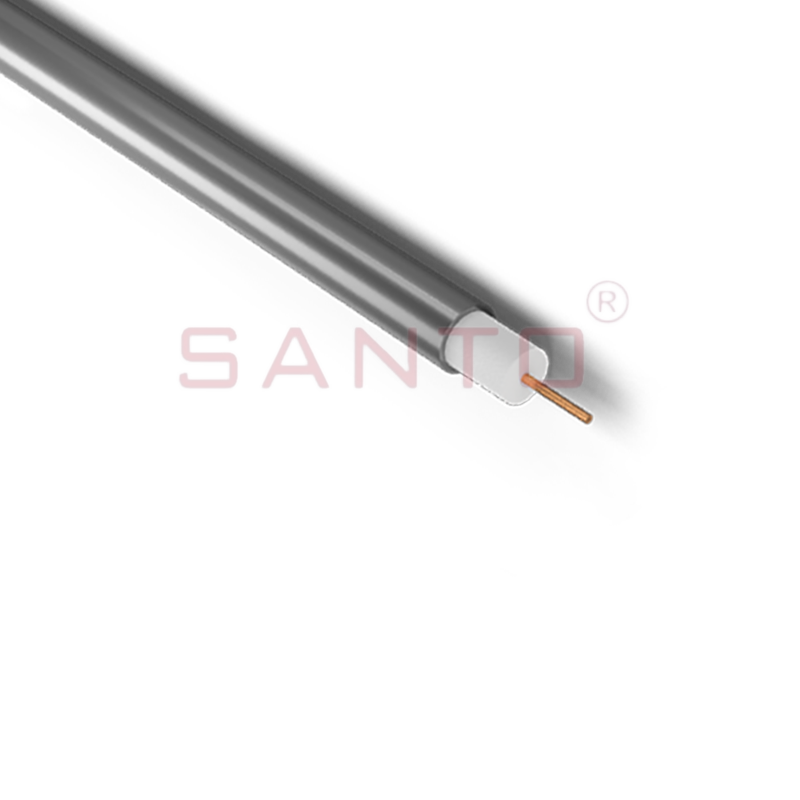 Alloy 825 Sheathed Mineral Insulated Heating Cable for Hazardous AreasCorrosion-resistant MI heat tracing for high-temperature freeze protection and temperature maintenance in chloride-rich offshore, oil, gas, chemical, and energy service.View Product →
Step 4: Terminations, Controls and Ground-Fault Protection
A cable's hazardous-area certificate stops at its cold lead. Whatever the cold lead lands in must carry the same zone, gas group and temperature class, or the installation is non-compliant no matter how good the cable is.
- Junction boxes in Ex e or Ex d versions, with certified cable glands matched to the cable diameter.
- Hazardous-area thermostats, either pipeline induction or surface sensing types, so the circuit switches on load rather than on ambient guesswork.
- Ex-approved temperature sensors. The MMP-PT100Ex range measures up to 482 °C, which covers steam-out and high-temperature tracing duties.
- Ground-fault protection on every branch. IEC practice and NEC 427.22 both expect it, and 30 mA is a common trip level.
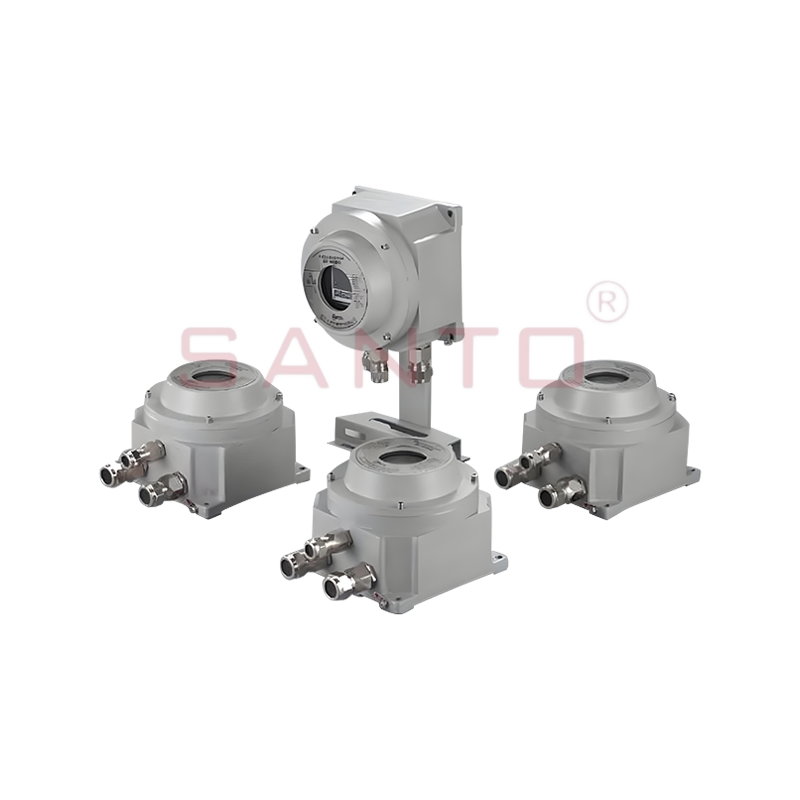 HDBK-WK Explosion-Proof Temperature Controller for Electric Heat TracingIntelligent terminal temperature control accessory replacing mechanical thermostats, with protection, warning, monitoring, and communication functions for electric tracing systems.View Product →
Commissioning and Maintenance Checks That Catch Real Problems
Four checks repay their cost within the first year of operation, and skipping them is how safe designs become unsafe installations.
- Measure insulation resistance on every circuit at 500 VDC before the thermal insulation is closed up, and again before energising.
- Run a thermographic survey under load once the line has stabilised, with the cable energised and at normal process temperature.
- Re-check the temperature class whenever the process temperature or the product changes; a cable compliant at 90 °C may not be at 140 °C.
- Inspect junction boxes for moisture at every shutdown, and keep as-built drawings showing the trace routing.
Frequently Asked Questions
Can self-regulating cable be used in Zone 1?
Yes, when it carries the correct hazardous-area certification and its sheath temperature stays inside the area's temperature class. The cable itself is rarely the problem; the terminations usually are.
Does a hazardous area always need a thermostat?
No. In Zone 2 with a low maintain temperature, self-regulating cable and an approved junction box are often enough. In Zone 1 with high power density, a thermostat or limiter is what keeps the T-rating valid.
Can mineral-insulated cable be cut to length on site?
Generally no. MI cable is supplied in factory lengths with sealed terminations, so ordering the right length is a design task, not an installation detail.
What if the process temperature rises after commissioning?
Re-run the temperature class check immediately. A 30 °C rise in line temperature can push a compliant installation outside its T-rating, and the fix may be a different cable family rather than a different thermostat.
If you have the area classification drawing, the line size, the insulation details and the required maintain temperature, selection becomes a short engineering exercise instead of a debate. Send those four items to our engineers through the contact page and we will come back with a cable family, a power density and the matching Ex-rated hardware.