English
 English
 русский
 日本語
 Español
 中文简体

The right heat tracing cable for an industrial pipeline is the one whose published output curve, maximum sheath temperature, circuit-length limit, and certification all fit the pipe's calculated heat loss at the lowest ambient temperature the site will actually see. Price per meter, brand habit, and "what the last project used" are tiebreakers at best, and they are the usual reason a traced line underperforms in its second winter.
Heat tracing is the practice of adding electrical heat to a pipe, vessel, or sample line to replace the heat it loses through insulation, so the fluid stays above a target temperature. Selection is therefore a matching exercise: the cable's usable output must equal or slightly exceed the heat loss, without ever pushing the cable's own sheath beyond its temperature rating or the area's T-class limit.
Content
- The Five Inputs That Decide the Cable
- Calculate Heat Loss Before You Compare Cables
- Match the Cable Family to Temperature and Length
- Verify Circuit Length, Voltage Drop, and Cold-Start Current
- Sheath, Jacket, and Area Classification Decide the Rest
- Controls, Sensors, and Accessories Belong in the Same Decision
- A Short Specification and Procurement Checklist
- Frequently Asked Questions
The Five Inputs That Decide the Cable
Cable selection is settled by five inputs, not by catalogue browsing, and getting them onto one sheet before you open a datasheet removes most of the guesswork.
- Maintain temperature and tolerance. A freezing-protection line at +5 °C and a process line held at 180 °C are different product families, not different wattages of the same cable.
- Design heat loss in W/m. Calculated from insulation type and thickness, pipe diameter, fluid temperature, and minimum ambient.
- Minimum ambient and start-up conditions. A cold start at −30 °C draws far more current than steady-state operation, and that peak governs breakers and controllers.
- Circuit length and supply voltage. The available voltage and the distance from the distribution board cap how much cable can sit on one circuit.
- Area classification and environment. Hazardous zone, corrosion, UV exposure, burial, washdown, and mechanical abuse decide the sheath and the certification route.
Calculate Heat Loss Before You Compare Cables
Every cable decision starts with a heat loss calculation, because a cable can only hold a pipe at temperature if its output matches what that pipe loses through its insulation. Skipping the calculation and picking 30 W/m "as before" is the single most common selection error in retrofit work.
A usable calculation states its assumptions, and these are the ones worth checking line by line:
- Insulation material, thickness, and condition — wet or compressed insulation can lose several times the dry design value.
- Pipe diameter and fluid temperature, plus the acceptable band around the maintain point.
- Minimum ambient air temperature, wind speed for exposed racks, and whether the line is indoor, outdoor, or buried.
- Thermal bridges: pipe supports, valves, flanges, filters, and instrument connections that carry heat away.
- A design margin, typically 10–25 %, applied to the bare heat loss rather than to the cable output.
Ask for the heat loss at two ambient temperatures if the site has a mild design case and a severe one. The gap tells you how much spare capacity the cable needs, and it exposes designs that only work in spring.
Match the Cable Family to Temperature and Length
Choose the family first — self-regulating, power-limiting, constant wattage, polymer-insulated resistive, mineral-insulated, or skin-effect — because families differ fundamentally in how output changes with pipe temperature, how hot the sheath may run, and how long a single circuit can be.
| Cable family | Typical maintain temperature band | Output behaviour | Practical circuit length | Best fit | Main watch-out |
|---|---|---|---|---|---|
| Self-regulating | Low to moderate, family dependent | Output falls as the pipe warms and rises in cold | Short to medium, limited by cold-start current | Freeze protection, moderate process lines, field-cut lengths | High inrush current at low ambient |
| Power-limiting | Low to moderate | Power is limited as temperature rises; steadier than self-regulating | Medium to long | Longer moderate-temperature lines with wide ambient swings | Less forgiving of overlaps; confirm cut lengths |
| Constant wattage | Moderate to high | Fixed watts per meter regardless of pipe temperature | Medium | Stable heat per meter, higher temperatures, long runs | Cannot be overlapped; a wrong cut length scraps the cable |
| Polymer-insulated resistive | Moderate to high | Precise fixed resistance output | Long, with stable load | Process lines needing repeatable output over long distances | Circuit design must match voltage exactly |
| Mineral-insulated (MI) | High | High watt density, fixed output | Short to medium, high current per circuit | High temperature, aggressive environments, small tubing | Factory terminations, higher cost, careful bending |
| Skin-effect | High, over very long distances | Near-constant output along the whole pipeline | Kilometres | Long-distance transmission pipelines with elevated maintain temperatures | Specialist design, high voltage, fewer qualified suppliers |
Self-regulating cable where the design is still moving
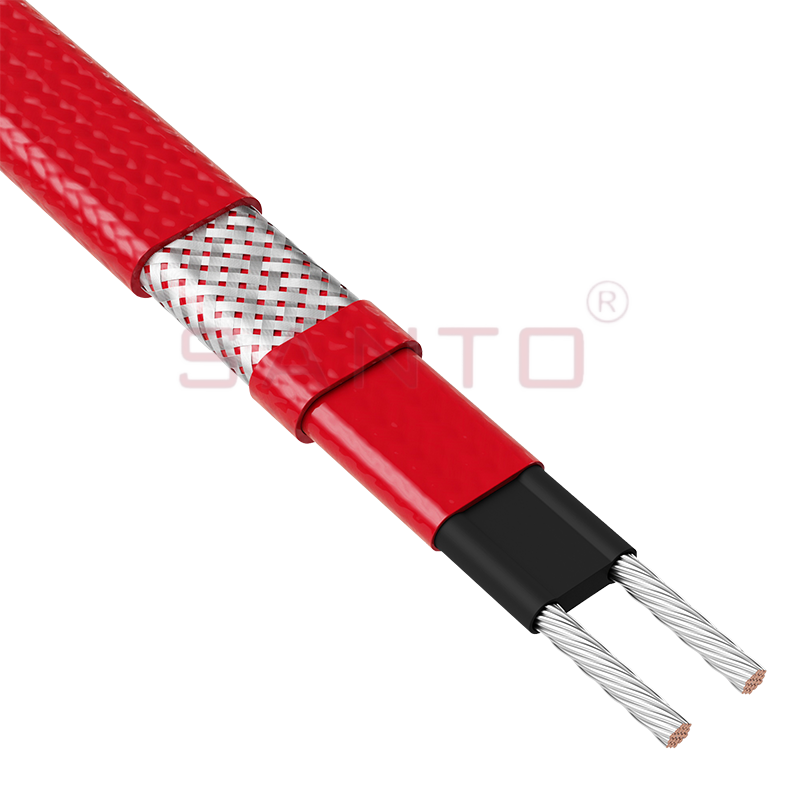
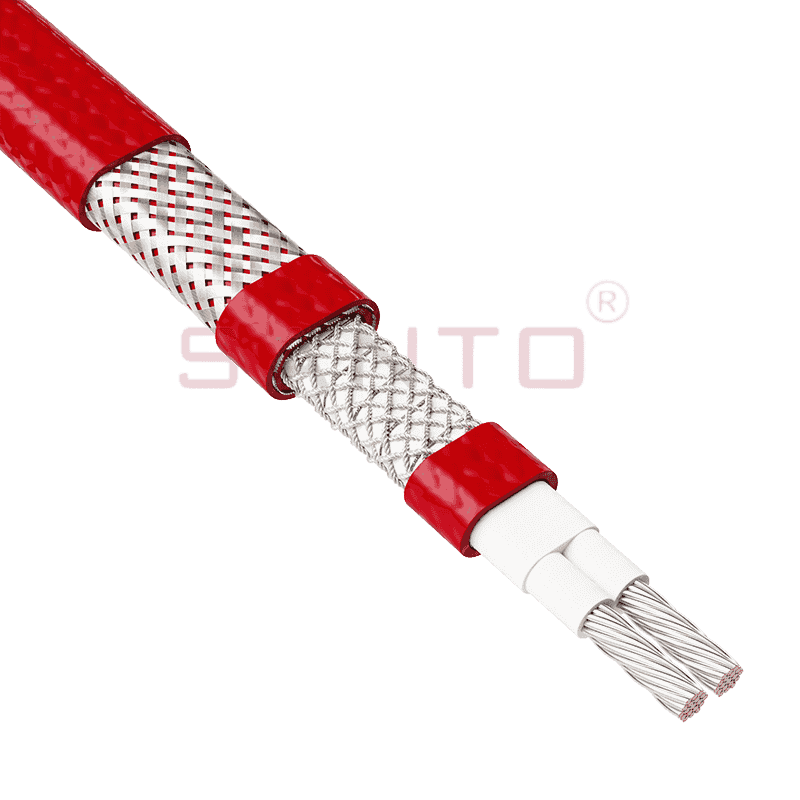
Self-regulating cable suits projects where pipe routing, valve positions, or insulation details are still being finalised, because it can be cut to length on site and its output drops as the pipe approaches its own temperature. That self-limiting behaviour is also why it is popular for freeze protection and for lines that may be partly empty.
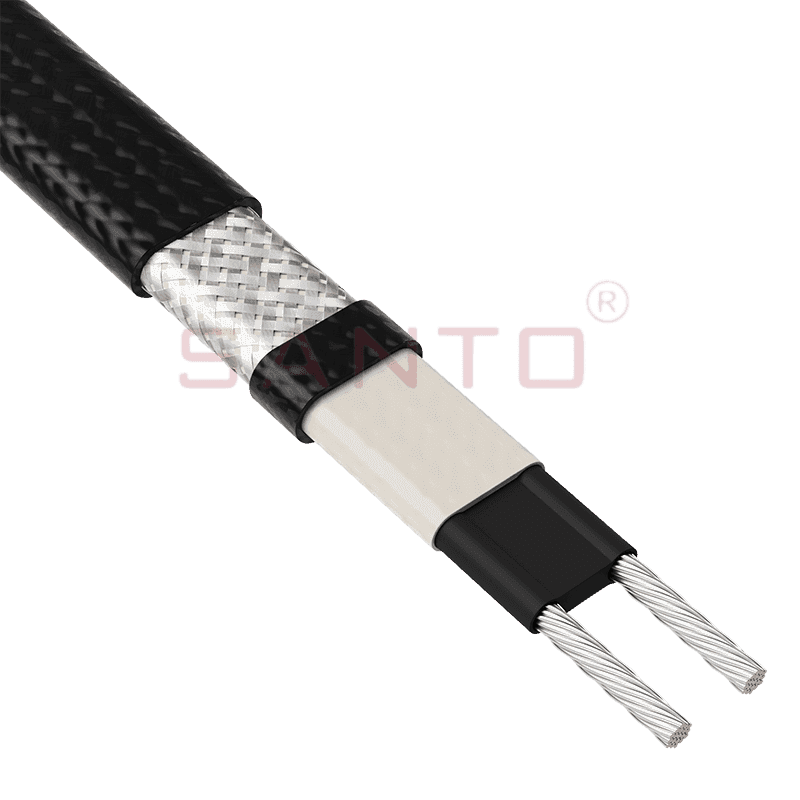 UFA Self-Regulating Heat Tracing CablesFor freeze protection and process maintenance up to 65°C, with polyolefin or fluoropolymer jackets and hazardous-area approvals.View Product →
Constant wattage where heat per meter must be predictable
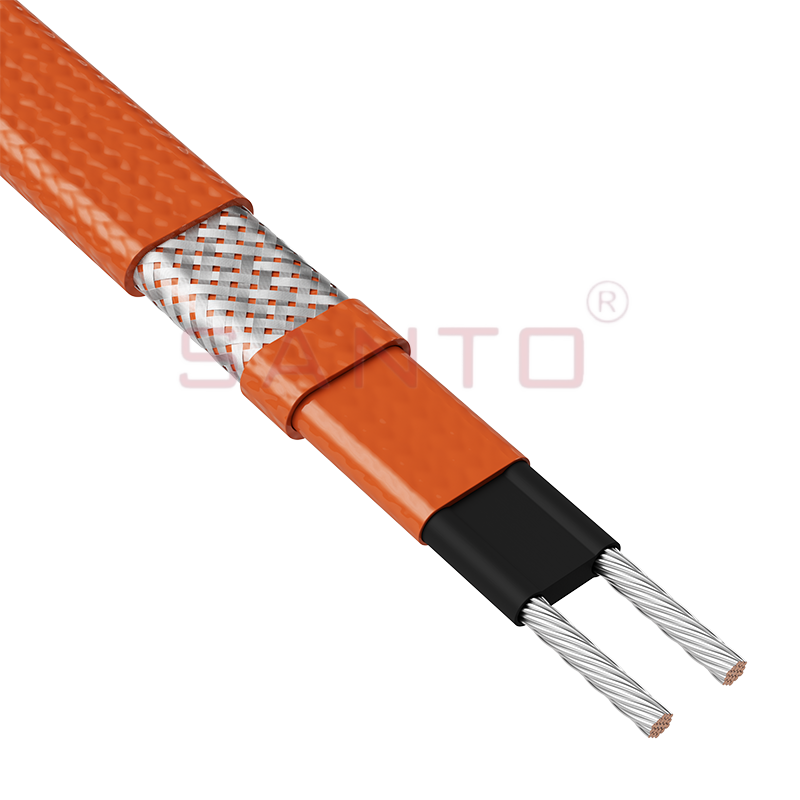
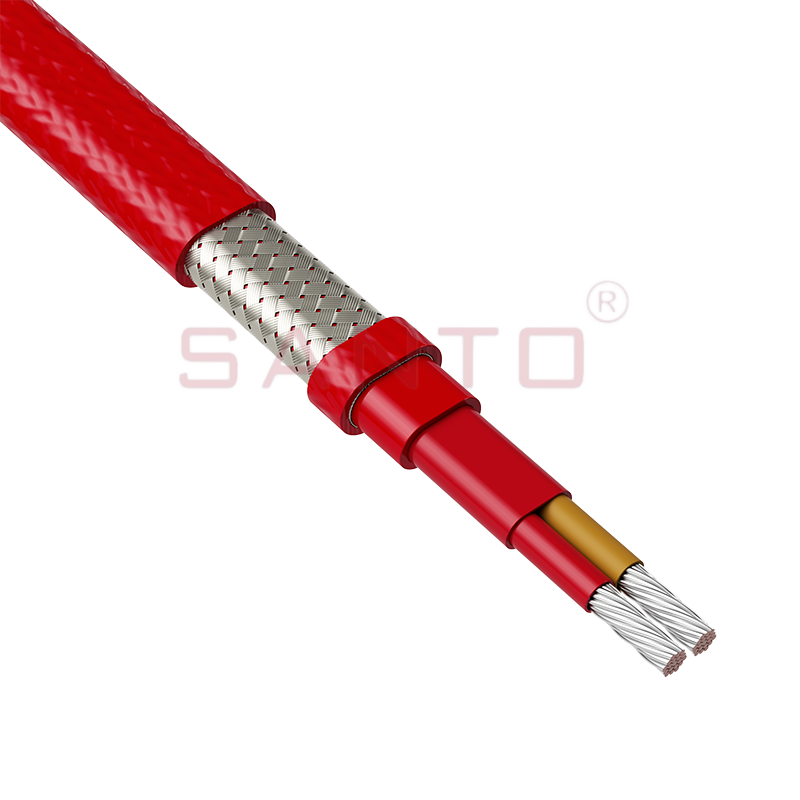
Constant wattage cable is the better answer when the process needs a defined number of watts per meter along a known length, or when maintain temperatures climb past what polymer self-regulating cores will hold. The trade-off is discipline: no overlapping, no trimming after installation, and a design that fixes circuit lengths in advance.
Skin-effect where the pipeline is measured in kilometres
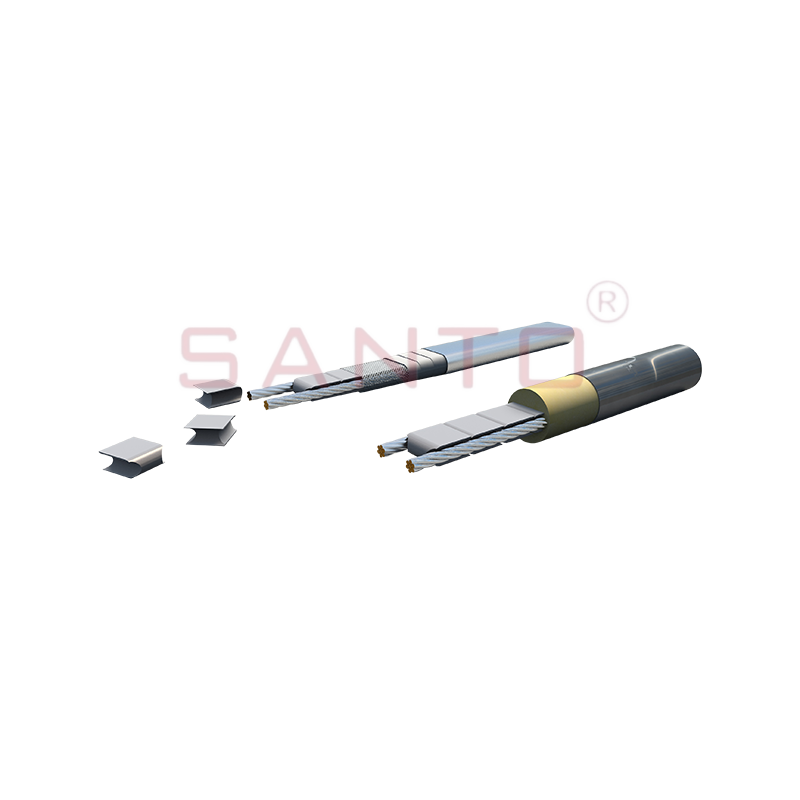
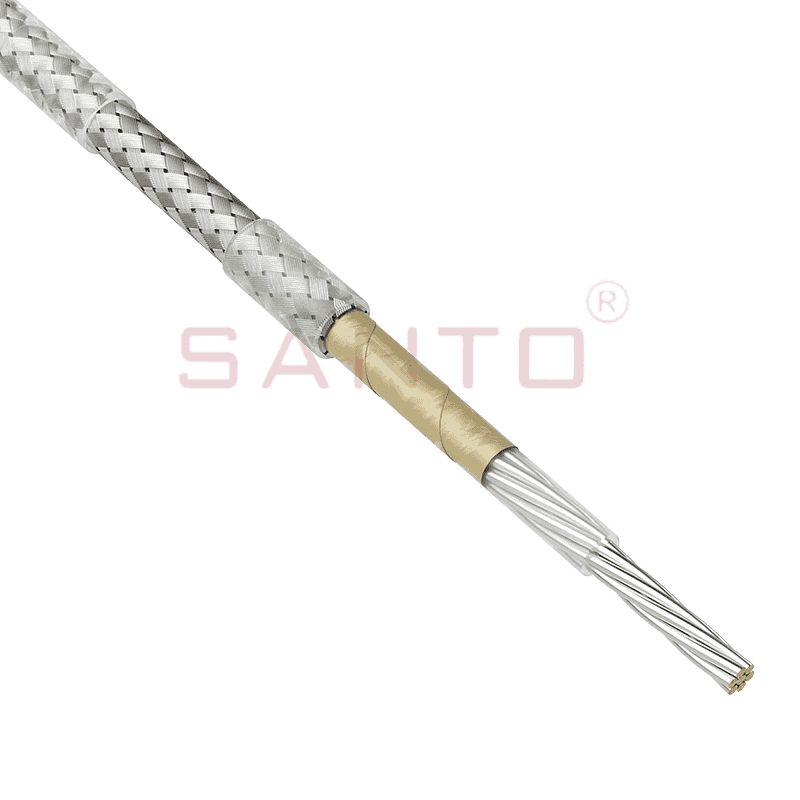
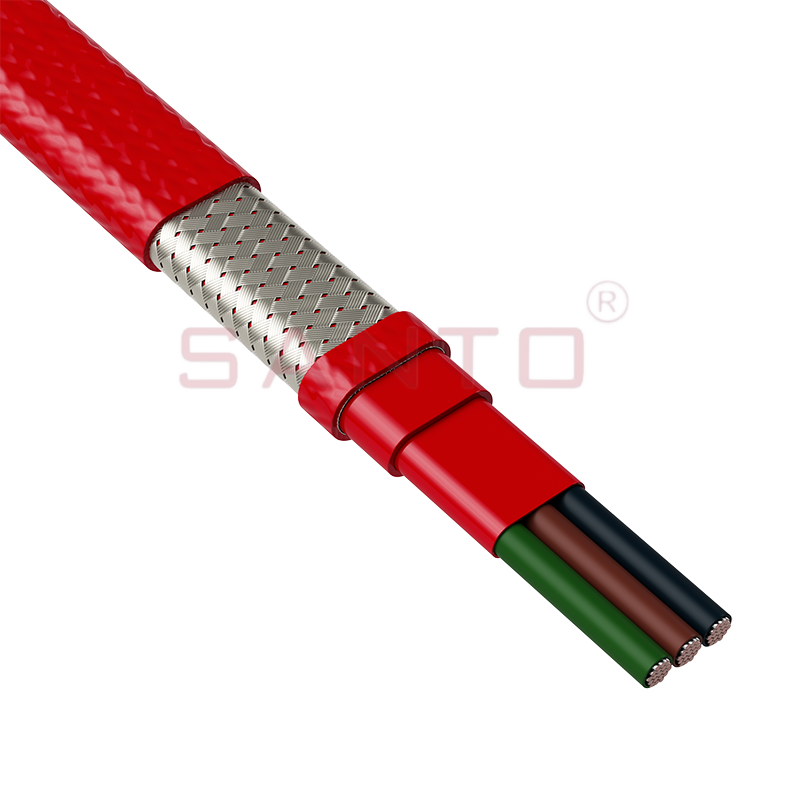
For long transmission lines carrying hot product, skin-effect systems keep output near-constant over distances that would need dozens of conventional circuits, using a single heat tube and high-voltage supply. A typical starting point is the STS-HT skin-effect tracing wire, though the whole system — heat tube, insulation, power unit — is designed as one package.
Verify Circuit Length, Voltage Drop, and Cold-Start Current
The maximum circuit length in a datasheet is a hard limit, and it is usually set by voltage drop or cold-start current rather than by heating capacity. Installers who ignore it end up with a warm first ten meters and a cold tail end.
Three checks catch almost every problem before the cable is ordered:
- Voltage at the far end. Long runs on low supply voltage lose output; ask for the maximum length at your actual voltage, not the catalogue's headline figure.
- Cold-start current. Self-regulating cable can draw several times its nominal current at low ambient, which trips breakers and overloads controllers sized on steady-state amps.
- Breaker and RCD coordination. Earth-leakage protection and magnetic trip settings must sit above that start-up current while still protecting the circuit.
Where a line needs high watt density at elevated temperature and the circuit is long, a carbon-fibre constant wattage construction is often a better match than a standard constant wattage type.
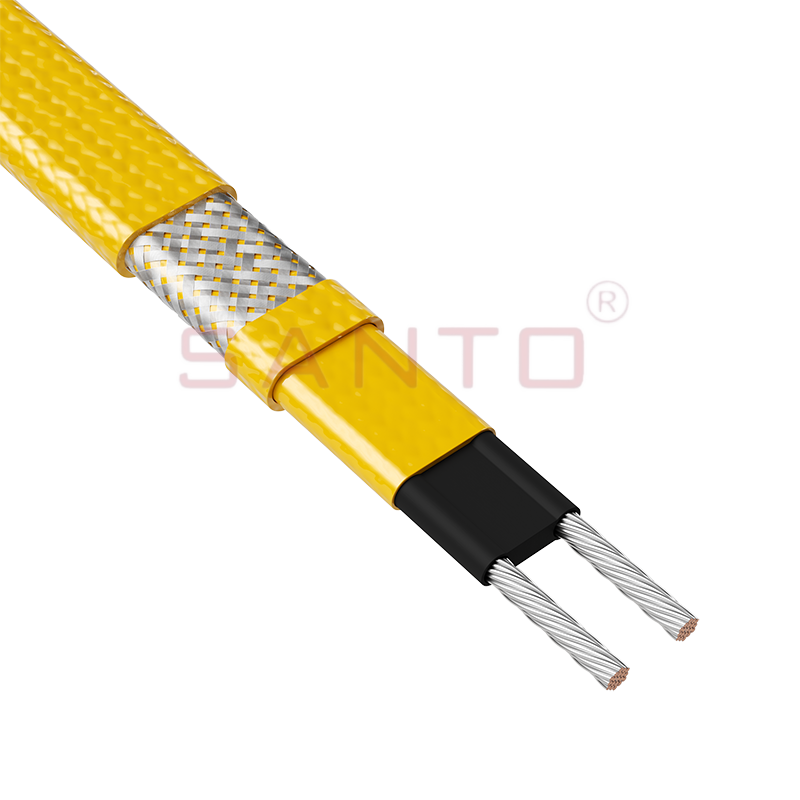
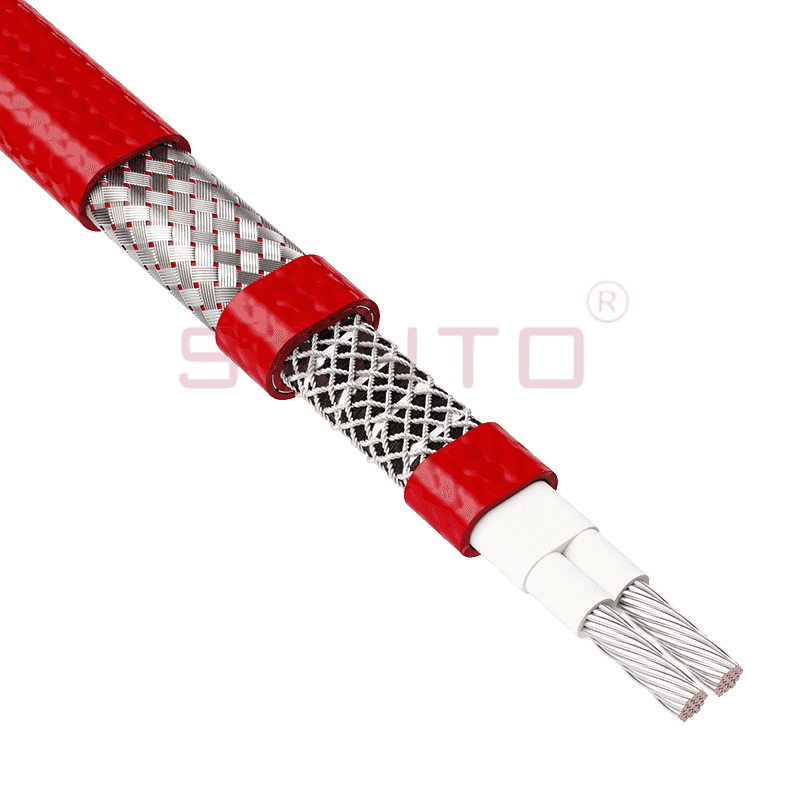 AFF-CT Carbon-Fiber Constant Power Heating CableFor high-temperature process maintenance and frost protection, with fluoropolymer jackets, 480 V long circuits, and hazardous-area approvals.View Product →
Sheath, Jacket, and Area Classification Decide the Rest
Once the family and circuit length fit, the sheath and certification decide whether the cable may legally be installed where you need it — and whether it survives five years of condensate, washdown, or sunlight.
Check the following before approving a cable:
- Maximum sheath temperature against the T-class. The hottest possible cable surface, under fault or overheating conditions, must stay inside the area's permitted class.
- Jacket chemistry. Fluoropolymer jackets resist fuels and solvents; standard PVC does not. Buried lines need moisture and mechanical protection, not just a thin jacket.
- Metallic covering and earthing. Braid or sheath provides earth continuity and mechanical protection; confirm the fault path required for the installation.
- Zone and certification paperwork. The certificate number and temperature class must appear in the documentation package, not only on a marketing page.
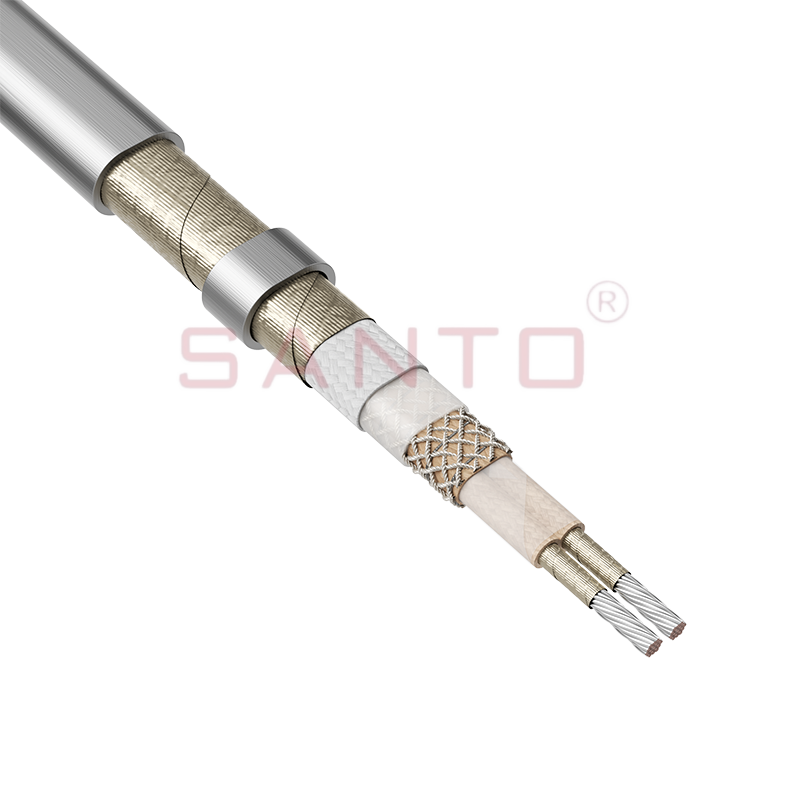
Above the practical range of polymer cables, or where condensate would attack a soft jacket, an Alloy 825 sheathed mineral-insulated cable gives a sealed metal barrier with a small bend radius and high watt density.
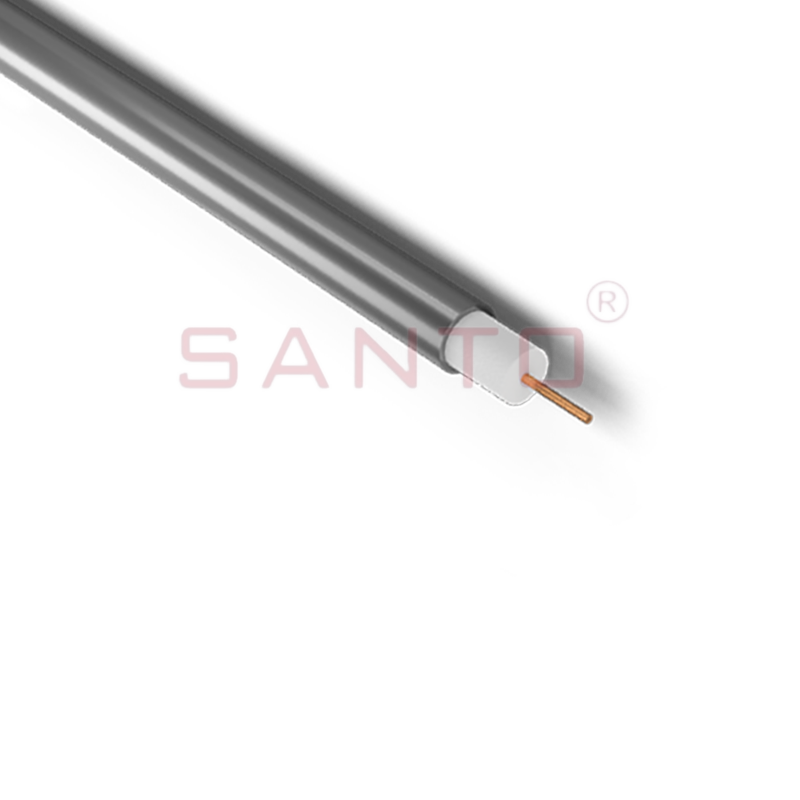 HAx-Series Alloy 825 MI Heating CableFor high-power, high-temperature pipe and tank tracing up to 700°C, with corrosion-resistant Alloy 825 sheath and factory-terminated options.View Product →
Controls, Sensors, and Accessories Belong in the Same Decision
A heat tracing cable without matched control and termination is an unfinished installation, and it is the part most often left out of the quotation. An uncontrolled self-regulating cable is safe but wasteful; an uncontrolled constant wattage cable is a genuine risk.
Decide four things alongside the cable: whether control is by pipe line-sensing or ambient-sensing; where the sensor sits (away from the cable, on the cold side of the pipe); how the junction boxes, cold leads, and end seals are arranged; and how the circuits will be labelled, tested, and recorded at handover.
For hazardous areas, the thermostat or controller must carry matching certification and a temperature range that brackets the maintain point with margin — a HDBK-WK explosion-proof temperature controller is the kind of component that should be confirmed at the same time as the cable, not after the steelwork is up.
A Short Specification and Procurement Checklist
Put these items in writing and cable selection stops being a matter of opinion. Every serious supplier will answer them without hesitation, and evasive answers are themselves useful information.
- Heat loss calculation with stated assumptions and margin.
- Required maintain temperature, minimum ambient, and cold-start condition.
- Selected family, catalogue number, and its output curve at your voltage.
- Maximum circuit length, cold-start current, and breaker/RCD requirements.
- Maximum sheath temperature, T-class, and certificate references.
- Circuit schedule with lengths, junction box positions, and control zones.
- Accessories list: cold leads, end seals, tape, supports, labels, spare parts.
- Documentation, factory test records, and who performs on-site insulation resistance testing.
Frequently Asked Questions
Can one cable type serve every pipeline in a plant?
Rarely. A plant with a freezing-protection water line, a 160 °C asphalt line, and a 2 km transfer pipeline is asking for three families — self-regulating, constant wattage, and skin-effect respectively. Standardising on one family usually means overpaying on some lines and underperforming on others.
Is self-regulating cable always more energy-efficient than constant wattage?
Not always. Self-regulating cable saves energy where pipes run warmer than the design case, because its output falls with temperature. On a line held continuously at a fixed high temperature, a well-controlled constant wattage or resistive circuit can be equally efficient, and the controller matters more than the cable family.
How much spare cable should be ordered?
Order spares for the terminations and the shortest circuits, typically a few percent of total length, rather than a long coil of one size. Constant wattage cable cannot be trimmed after installation, so a spare reel of the right type is more useful than extra meters of the wrong one.
Do I still need a thermostat with self-regulating cable?
Yes, if the line only needs heat in cold weather or only up to a set point. The self-regulating core prevents overheating, but it does not switch the circuit off, so ambient or line-sensing control is what actually cuts the running cost.
What goes wrong most often after commissioning?
Damaged jackets at supports and valves, moisture in junction boxes, and sensors installed where they read the cable rather than the pipe. These produce cold spots and nuisance trips long before the cable itself fails.
Choosing heat tracing cable for an industrial pipeline comes down to matching a published output curve to a calculated heat loss, then confirming that the sheath temperature, circuit length, and certification all survive the site's worst condition. Do that in that order, with the numbers written down, and the cable you install will still be holding temperature on the coldest night of the fifth winter rather than the first.