English
 English
 русский
 日本語
 Español
 中文简体

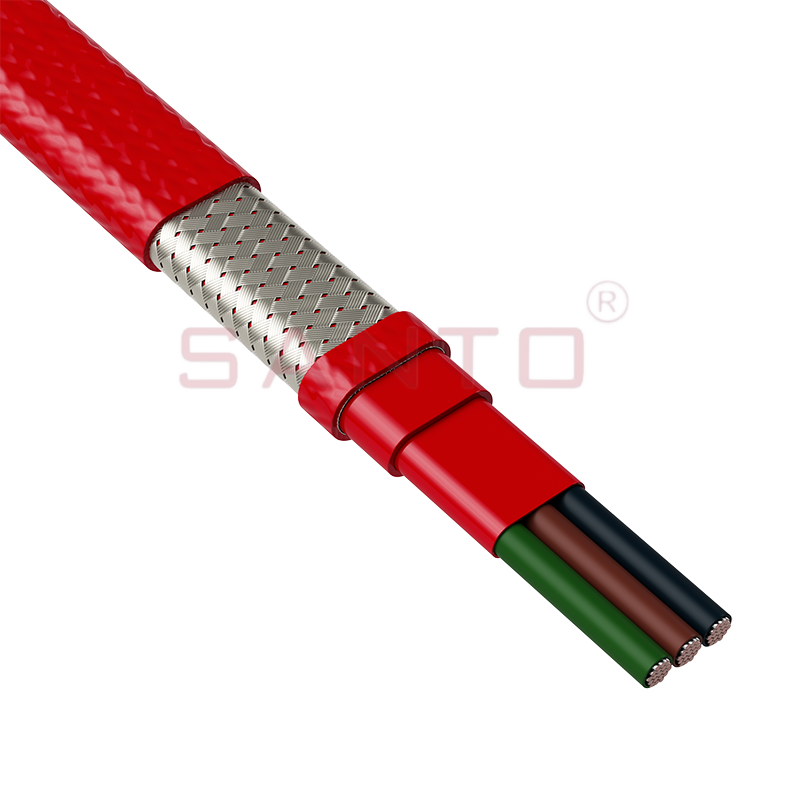
The short answer: for most freeze protection and moderate-temperature process lines, self-regulating heating cable is the simpler, lower-installed-cost choice; for high temperature, high watt density, harsh mechanical service, or long-life process duty, mineral insulated cable is usually the safer engineering choice. Mineral insulated cable uses a metal sheath, mineral insulation, and a resistance element, so its output is fixed by circuit design. Self-regulating cable uses a conductive polymer core whose output falls as its temperature rises.
Both are electric heat tracing cables, but they solve different problems. The right choice depends on maintain temperature, maximum exposure temperature, heat loss, circuit length, installation skill, area classification, and maintenance access. For a closer look at the hardware, review the mineral insulated cable range and the self-regulating cable range.
Content
Match the Cable to Heat Demand, Not Just the Label
Selection should start with line conditions, not with a generic preference for one cable type. A cable that works well on a water line at a moderate maintain temperature may be a poor fit for a high-temperature process line, a long tank farm run, or a location where terminations are hard to inspect.
- Choose mineral insulated cable when the design needs high temperature capability, high power density, strong mechanical protection, or stable output in harsh service. Plan the circuit length and termination method early.
- Choose self-regulating cable when the duty is freeze protection, moderate process maintenance, or a route with many branches and retrofits. It is easier to cut to length and usually faster to install.
If the line has a high design temperature, high watt density, or a harsh mechanical or chemical environment, MI is usually the lower-risk choice. If the duty is freeze protection or moderate process maintenance and the route has many branches, self-regulating cable is usually faster to install and easier to adjust.
They Regulate Heat in Fundamentally Different Ways
The key difference is control behaviour: MI cable delivers a fixed resistance-based output, while self-regulating cable changes output with temperature. That difference affects design, installation, energy use, and failure risk.
Mineral Insulated Cable: Metal-Sheathed, Constant Wattage
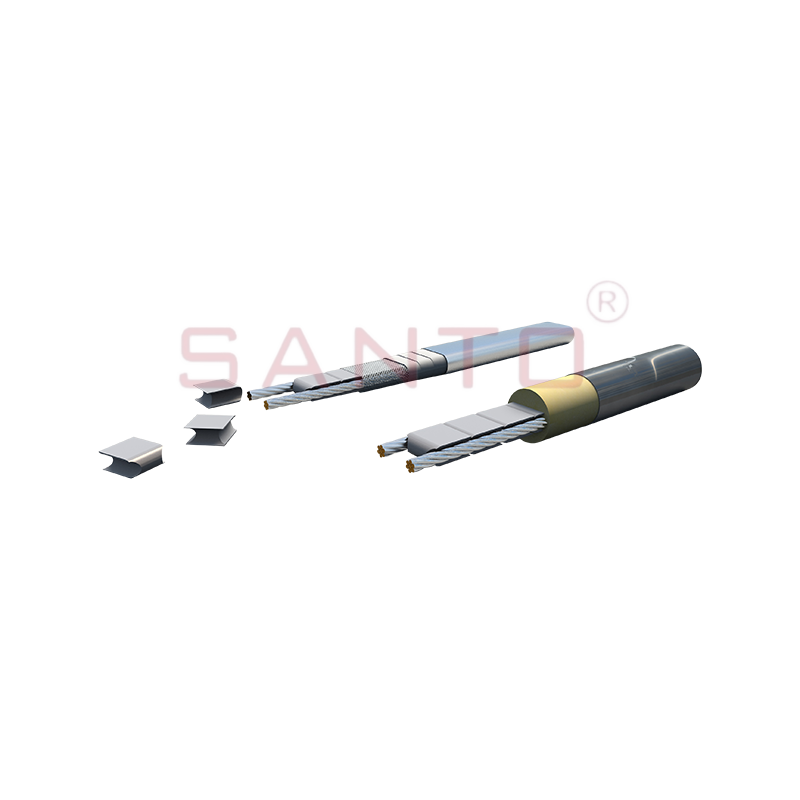
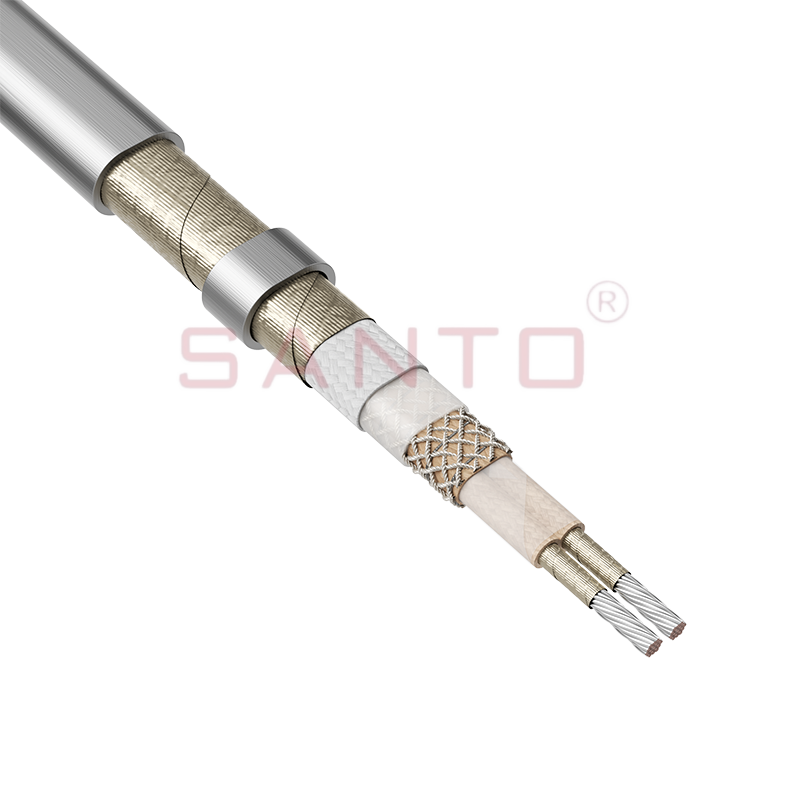
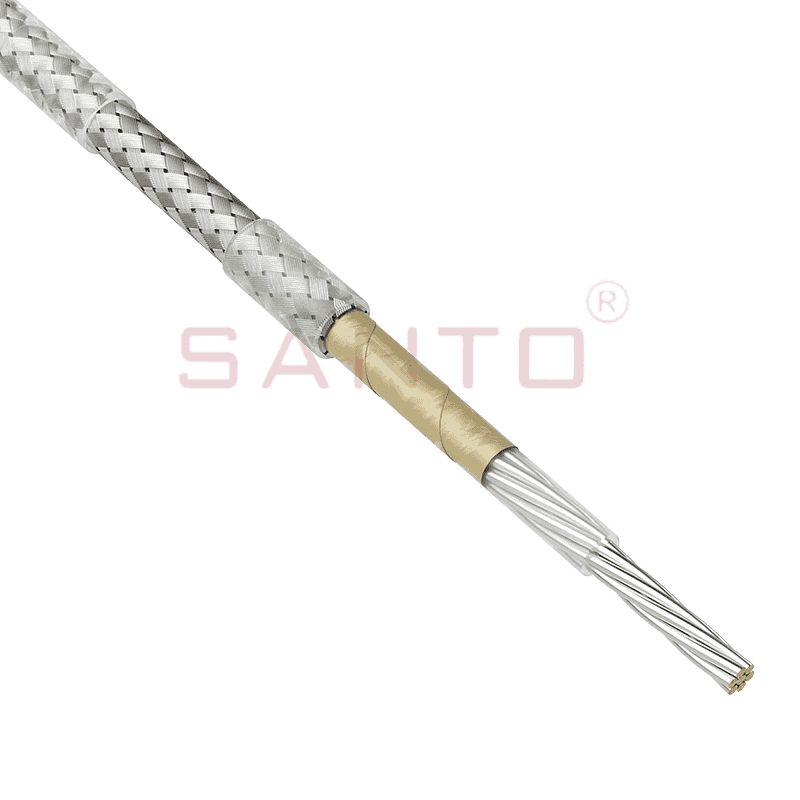
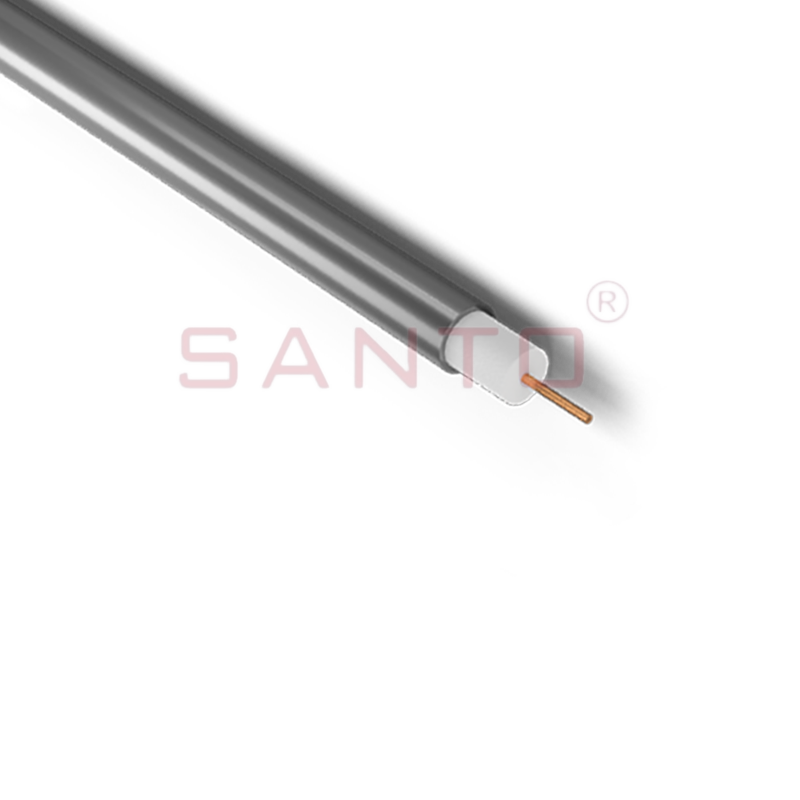
MI heating cable is built with a resistance conductor, mineral insulation, and a metal sheath. SANTO offers 321 stainless steel and Alloy 825 sheathed versions, which are intended for demanding thermal and mechanical conditions. Because the heating element is a series resistance, the output is tied to conductor resistance, cable length, and supply voltage.
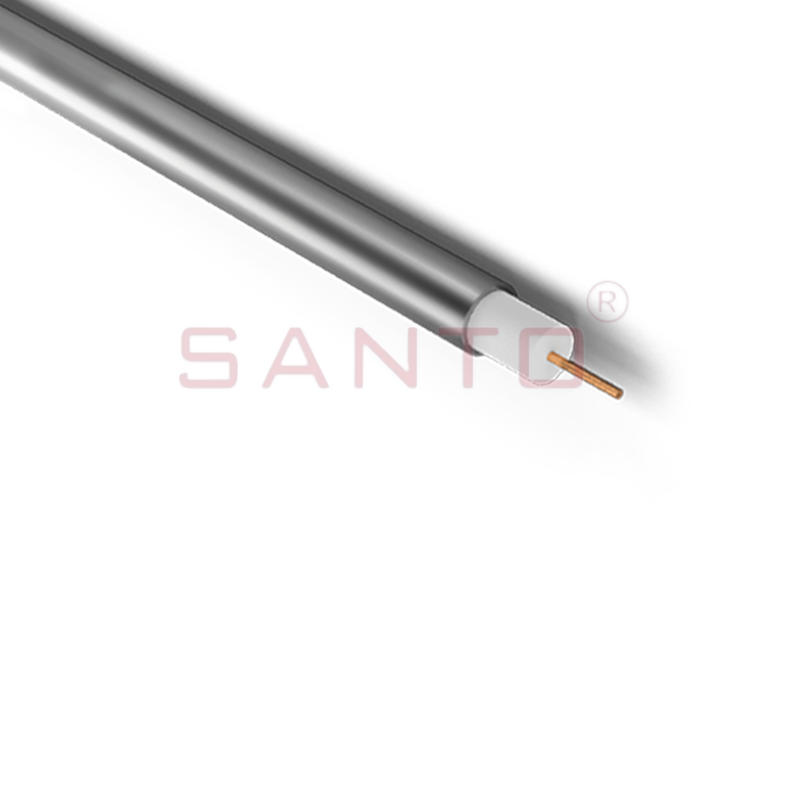 MI Heating Cable-321 with Stainless Steel Sheath321 stainless steel MI heating cable for high-temperature industrial heat tracing, with corrosion-resistant sheath and mineral insulation for demanding thermal and mechanical conditions.View Product →
That fixed output is an advantage when the process needs stable heat and a robust sheath. It is a disadvantage when a contractor changes the length in the field without recalculating wattage. MI cable is less forgiving than self-regulating cable if the circuit design changes late.
Self-Regulating Cable: PTC Core, Output Falls as Temperature Rises
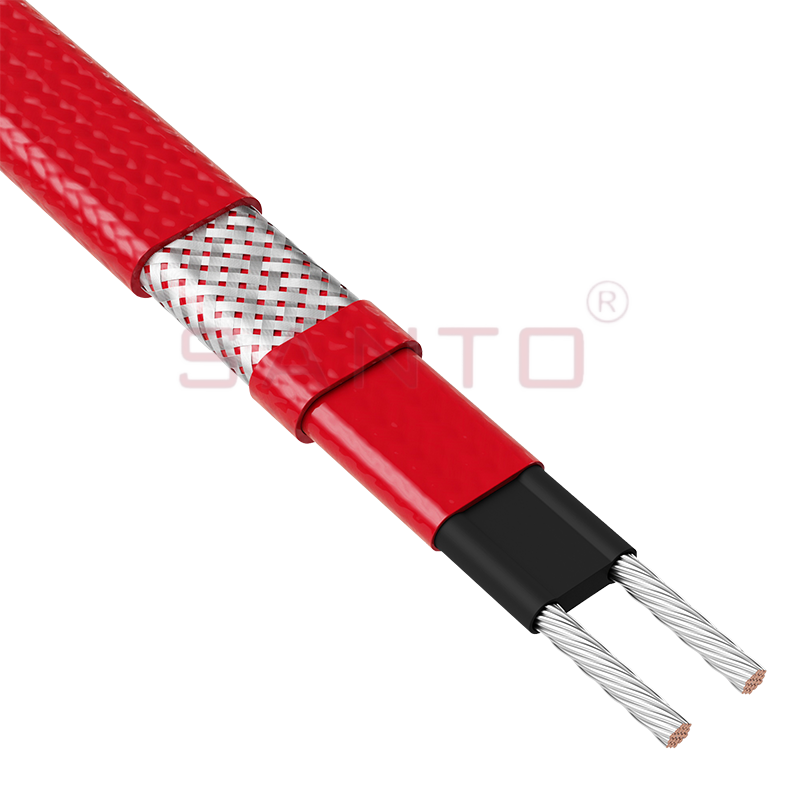
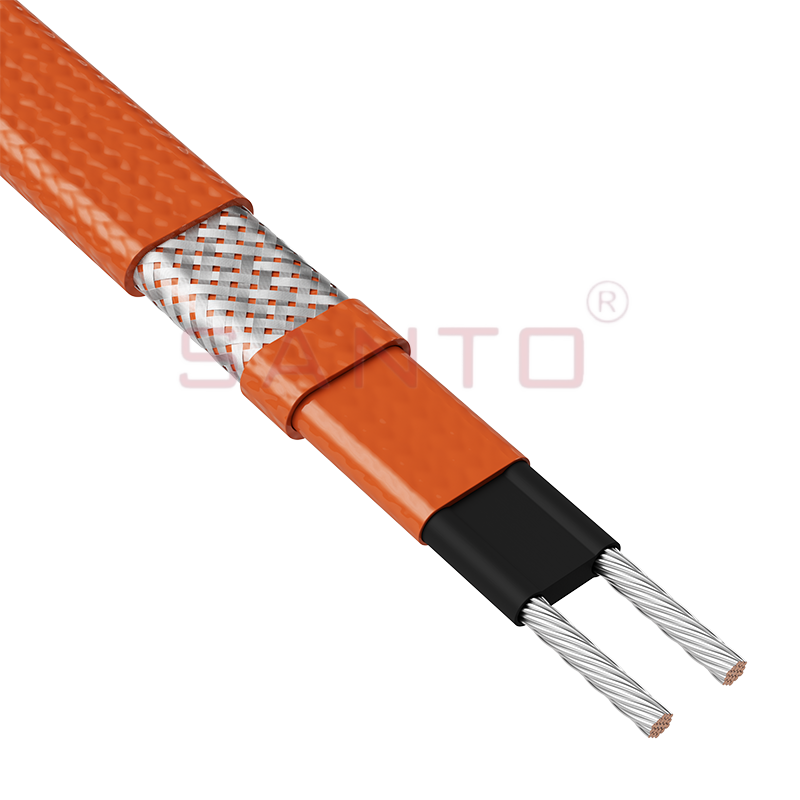
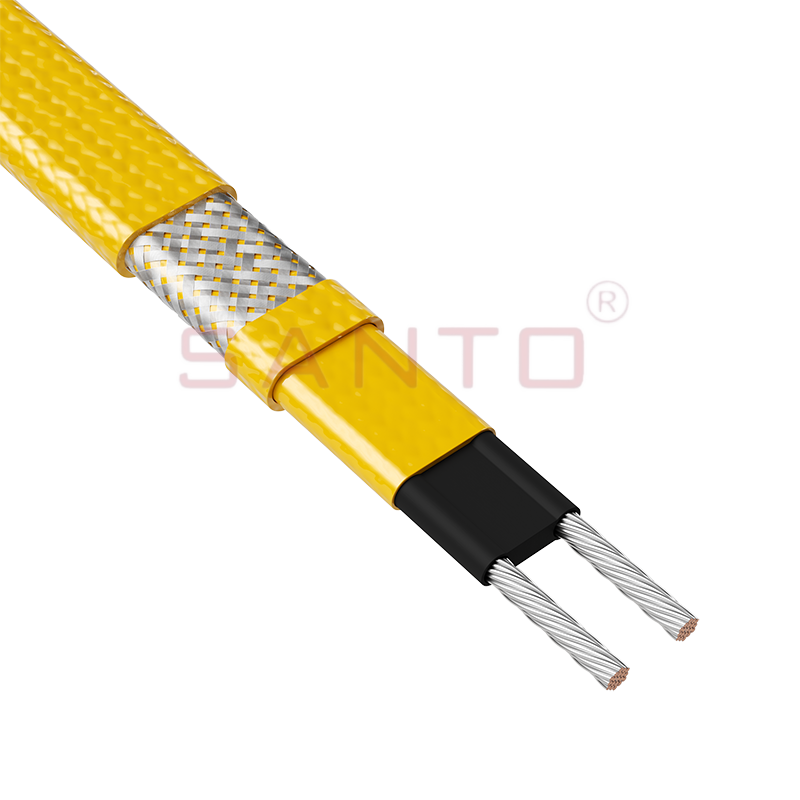
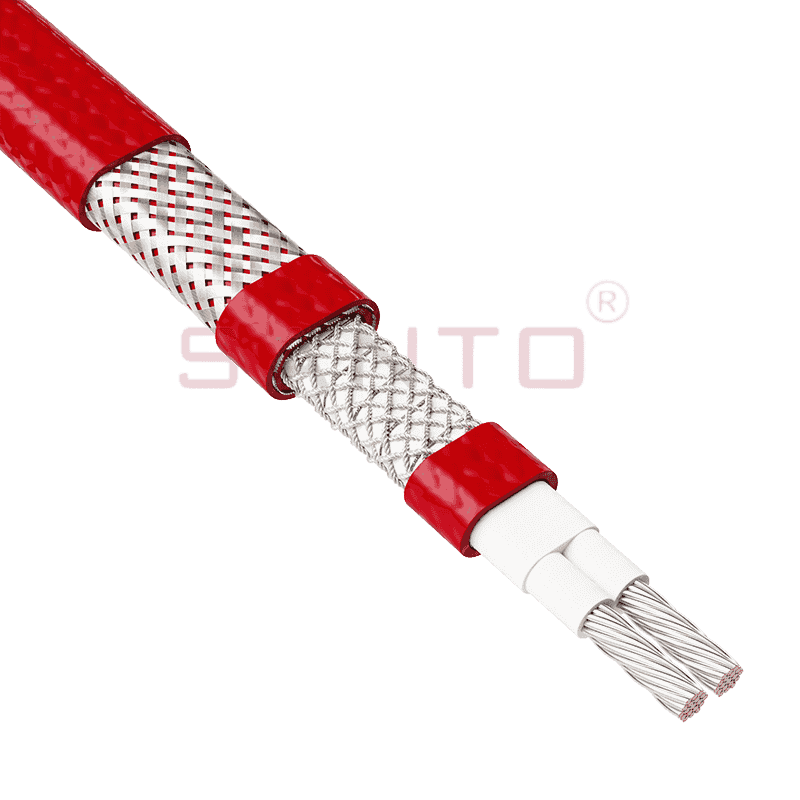
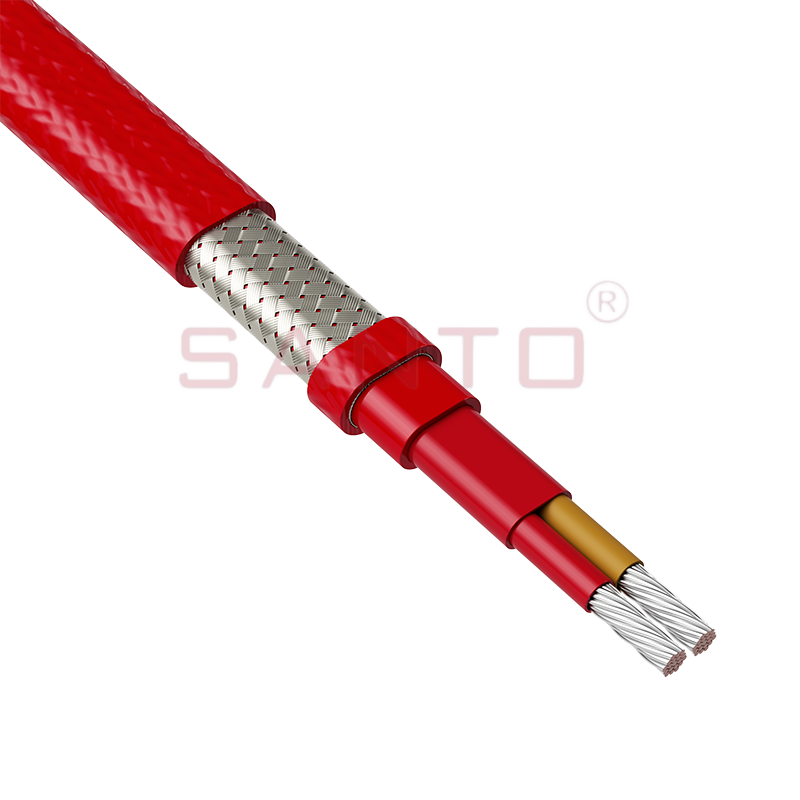
Self-regulating cable has parallel conductors separated by a conductive polymer core. As the cable warms, the core expands and resistance rises, so output drops. This gives built-in self-limiting behaviour and reduces the risk of overheating when the cable is cut to length or installed with some overlap, provided the manufacturer's instructions are followed.
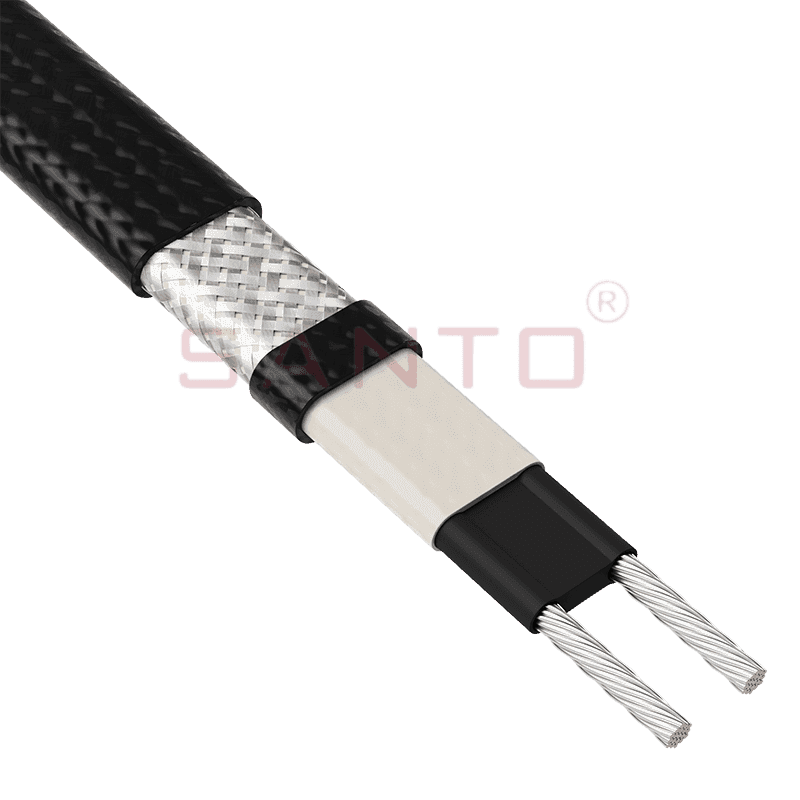 UFA Self-Regulating Heat Tracing CablesSelf-regulating heat tracing cables for frost protection and process temperatures up to 65°C, with polyolefin or fluoropolymer jackets and hazardous-area approvals.View Product →
The trade-off is lower temperature capability and output that varies with ambient and pipe temperature. On long runs, voltage drop and low-temperature start-up current need to be checked. The cable may produce high output when cold and much less output once the line is warm.
| Selection factor | Mineral insulated cable | Self-regulating cable |
|---|---|---|
| Heat output behaviour | Fixed for a given length and voltage; series resistance design. | Varies with temperature; PTC core reduces output as it warms. |
| Temperature capability | Higher; metal sheath and mineral insulation support demanding service. | Lower; polymer core and insulation set practical limits. |
| Watt density | Can be designed for high watt density where the sheath and controls allow. | Moderate; self-limiting behaviour limits peak output. |
| Field cutting | Length affects resistance and wattage; use a qualified design and termination procedure. | Can be cut to length; follow instructions for overlap and cold leads. |
| Installation | More planning and skill, especially at terminations and seals. | Faster and more forgiving on branched or retrofit routes. |
| Best fit | High temperature, harsh service, stable process loads, long-life assets. | Freeze protection, moderate process lines, many branches, simpler retrofits. |
| Maintenance focus | Insulation resistance, loop resistance, and moisture ingress at ends. | Insulation resistance, continuity, physical damage, and control settings. |
Temperature and Circuit Design Drive the Real Cost
MI cable usually has a higher material and termination cost, while self-regulating cable often has a lower installed cost, but the cheapest purchase price is not always the lowest lifecycle cost. High-temperature or harsh-service projects can justify MI through longer service life and fewer callouts.
Check three numbers before comparing price: minimum ambient, maintain temperature, and maximum exposure temperature. Distinguish between maximum continuous and maximum intermittent ratings. A cable that meets the maintain temperature but sits at its limit during start-up, cleaning, or a fault condition has little margin.
For MI, circuit length and resistance determine wattage, so a late length change can change the heat output. For self-regulating cable, voltage drop and start-up current matter on long runs, and the output at low ambient may be much higher than at operating temperature. Ask for the design at both conditions, then verify breaker size, thermostat settings, and alarm limits.
Installation and Termination Decide Reliability
Self-regulating cable is faster and more forgiving to install, but MI cable is durable only when its terminations are sealed and fitted correctly. Most field problems sit at the ends, the connections, or the control panel, not in the middle of a good cable run.
Self-regulating cable can be cut to length and installed with overlap according to the manufacturer's instructions. That reduces design complexity, but the cable still needs protection from sharp edges, UV exposure, chemicals, and excessive pulling. Record insulation resistance and continuity before and after thermal insulation is closed.
MI cable needs clean terminations because mineral insulation can absorb moisture. Seals, end fittings, bend radius, and sheath condition are critical. Use qualified installers and record insulation resistance and loop resistance at commissioning. A poor MI termination is a common service issue, not necessarily a cable failure.
Controls and Hazardous-Area Safety Are Not Optional
Self-limiting behaviour does not replace a breaker, earth-fault protection, or a thermostat. Both cable types need correct overcurrent protection, earth-fault protection, and temperature control, especially in hazardous areas where approved junction boxes, sensors, and controllers are required.
Sensor placement matters as much as the cable label. A pipeline induction thermostat or explosion-proof controller may be needed where surface sensing is impractical or where the panel must sit away from the process. Pair the controller with the cable's temperature limits, alarm contacts, and area classification.
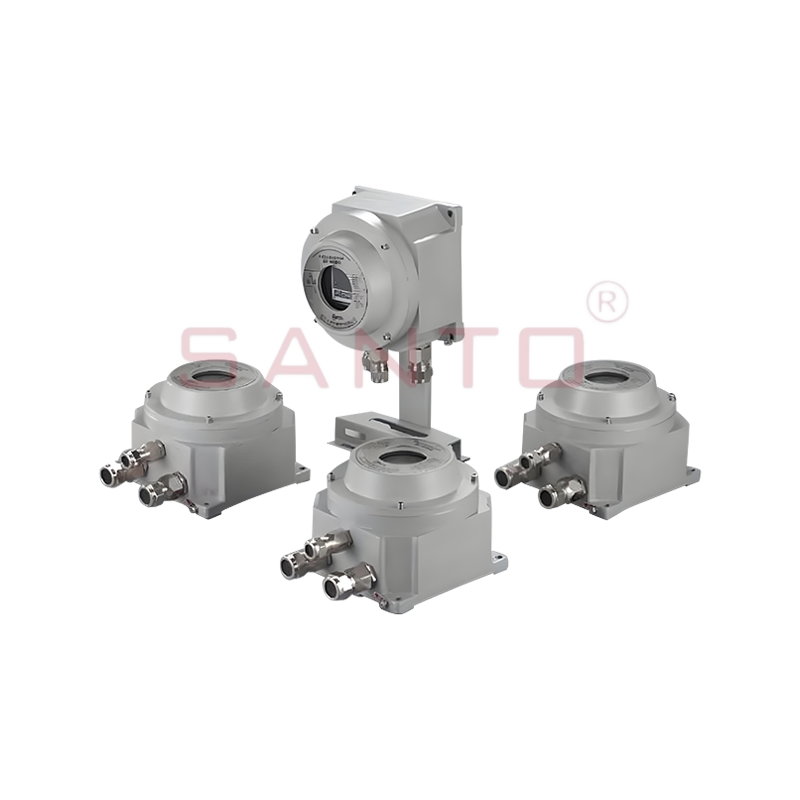 HDBK-WK Intelligent Explosion-Proof Temperature ControllerExplosion-proof temperature controller for electric heat tracing in petrochemical, gas, and power settings, offering current protection, limiting, alarms, monitoring, and communication functions.View Product →
A Practical Selection Checklist
If the line is high temperature, high watt density, or mechanically exposed, start with MI; if it is moderate-temperature freeze protection with branches and retrofits, start with self-regulating cable. Use this checklist to test that starting point against the actual project.
- Define maintain temperature, minimum ambient, and maximum exposure temperature.
- Calculate heat loss with insulation type, wind, and a realistic safety margin.
- Check supply voltage, circuit length, breaker size, and earth-fault protection.
- Confirm area classification and the approvals required for the location.
- Review installation access, termination skill, and future maintenance access.
- Compare installed cost: cable, terminations, controls, labour, testing, and spares.
FAQ
Can self-regulating cable handle high-temperature process lines?
Usually it is not the first choice. Polymer materials and insulation set a lower temperature ceiling than MI. Check the maximum continuous and intermittent ratings; if the line is near or above those limits, use MI or another high-temperature system.
Can MI cable be cut to length on site like self-regulating cable?
Not in the same way. MI is a series resistance heater, so length affects resistance and wattage. Field cuts may require a factory-designed termination or a qualified procedure. Confirm the design before cutting.
Is self-regulating cable safer because it self-limits?
It lowers overheating risk under some conditions, but it is not a substitute for electrical protection. Use the correct breaker, earth-fault protection, thermostat, and installation method.
Which is better for a long pipeline?
It depends on temperature and circuit design. Self-regulating cable may be simpler for freeze protection with branches. MI may be better for high temperature, high power, or harsh service. For long runs, check voltage drop, start-up current, and circuit resistance before choosing.