English
  English
 русский
 日本語
日本語 Español
 中文简体
中文简体
The most reliable solar panel deicer is a self-regulating electric heat-tracing cable mounted along the lower edge of the array and in the gutters and downspouts around it. Unlike spraying chemicals or scraping glass, this method prevents ice from forming, works automatically in freezing weather, and does not void panel warranties. If you already have solar panels in a snow zone, the question is not whether you need a deicing plan, but which one to choose. This guide explains the options with concrete comparisons and installation advice.
Content
- Why Ice and Snow Are a Serious Problem for Solar Arrays
- Comparing Solar Panel Deicing Methods
- Why Self-Regulating Heating Cables Are the Best Solar Panel Deicer
- How to Choose and Install a Solar Panel Deicing System
- Cost and Energy Trade-Offs You Should Know
- Frequently Asked Questions About Solar Panel Deicers
- Final Verdict
Why Ice and Snow Are a Serious Problem for Solar Arrays
Snow and ice on photovoltaic panels block sunlight and sharply reduce power output. In some cases, a heavy storm can cut production to zero for days. Ice adds weight to the mounting structure, and temperature swings can cause stress on the glass and frames.
Three consequences matter most for system owners:
- Energy loss: even a thin layer of snow can reduce output by 50% to 100%.
- Ice dams: when snow melts and refreezes at the lower edge, water can back up under panels or into roof flashings.
- Safety: climbing onto a snowy roof to clear panels is one of the leading causes of winter solar injuries.
That is why a solar panel deicer is best treated as part of the mounting design, not an aftermarket add-on. For more on the typical behavior of rooftop snow-removal cables, see our detailed guide on self-regulating heating cables for rooftop snow removal.
Comparing Solar Panel Deicing Methods
Not every deicer is equally safe for the panel surface. The table below compares the most common approaches used by residential and commercial owners.
| Method | Effectiveness | Risk to Panels | Energy Use | Maintenance |
|---|---|---|---|---|
| Manual scraping | Immediate but temporary | Scratches glass, can crack cells | None | High, do it after each storm |
| Warm water spray | Good for thin ice | Thermal shock can break glass | Water heating | Very high, unsafe on roofs |
| Chemical deicer spray | Slows re-icing | May corrode frames; runoff harms plants | None | Reapply frequently |
| Electric heating cable | Prevents ice before it forms | None if installed on frame or drain path | Only when temperature drops near 0°C | Low, automatic operation |
Electric heating cable is the only option that addresses the root cause: it keeps the critical drainage line above freezing. All other methods are reactive and carry hidden costs.
Why Self-Regulating Heating Cables Are the Best Solar Panel Deicer
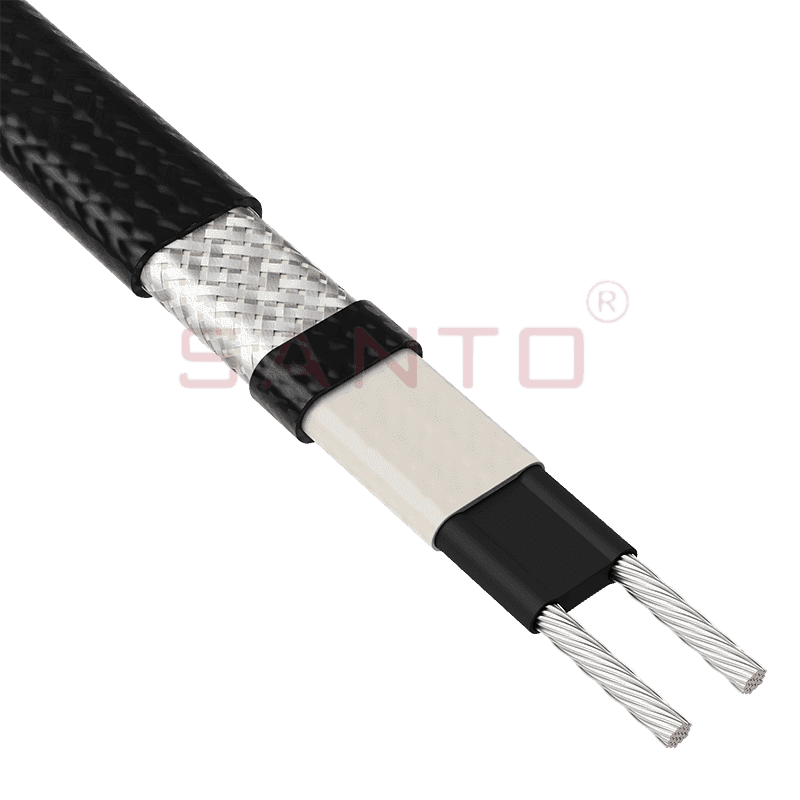
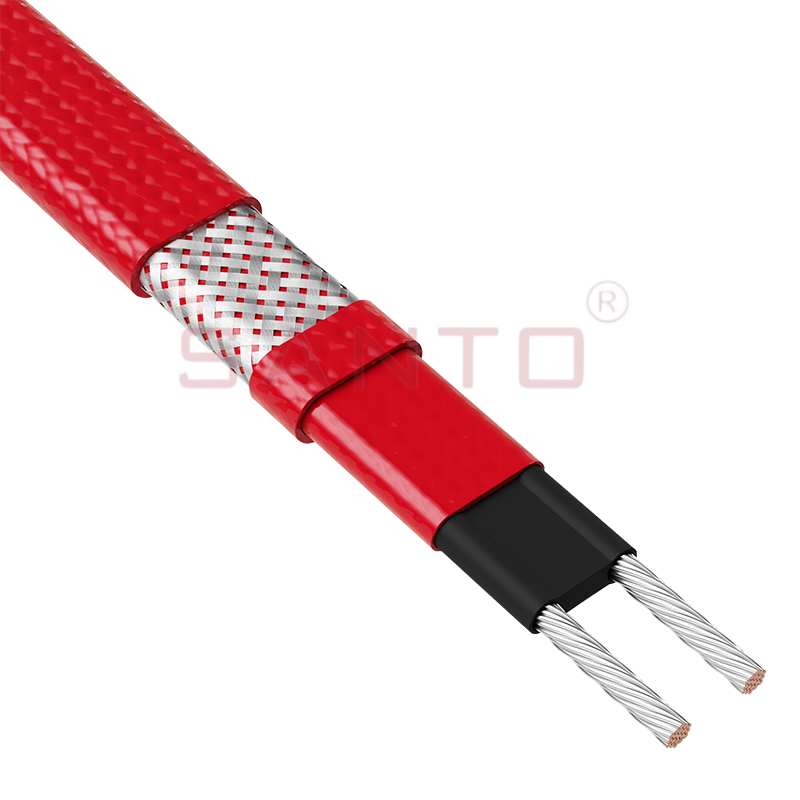
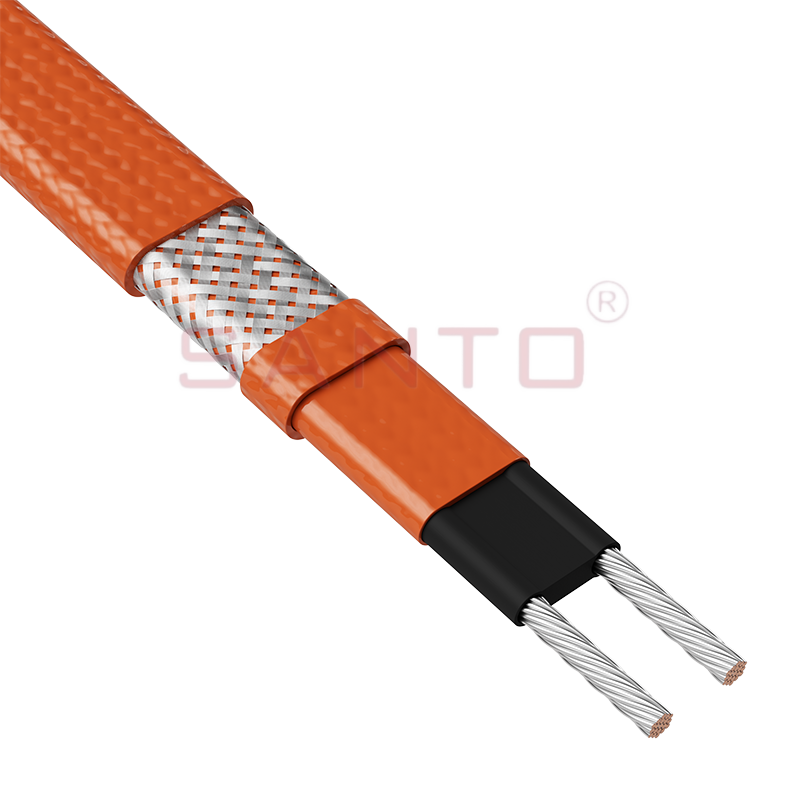
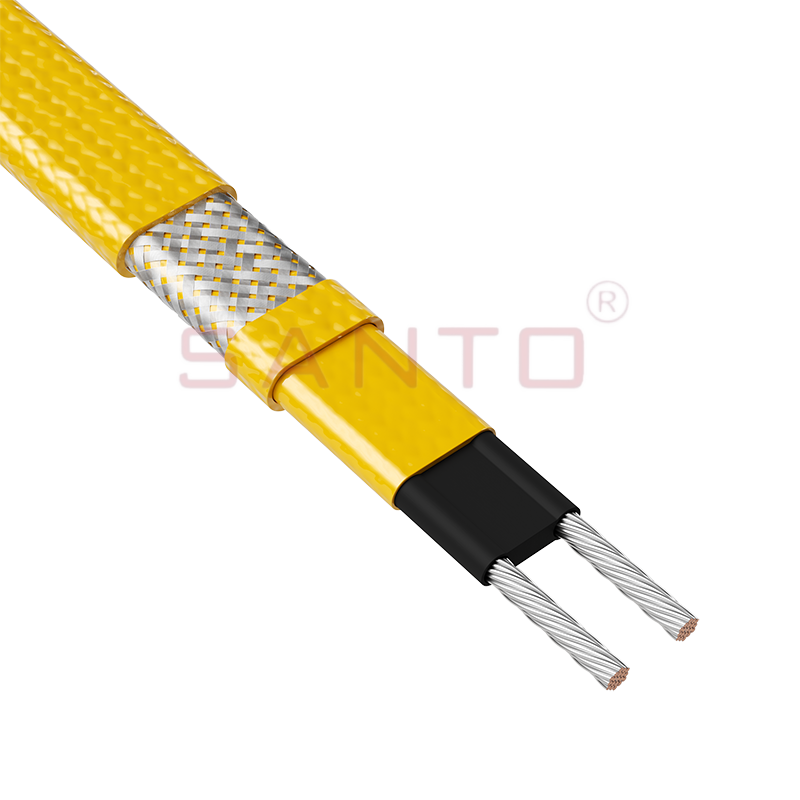
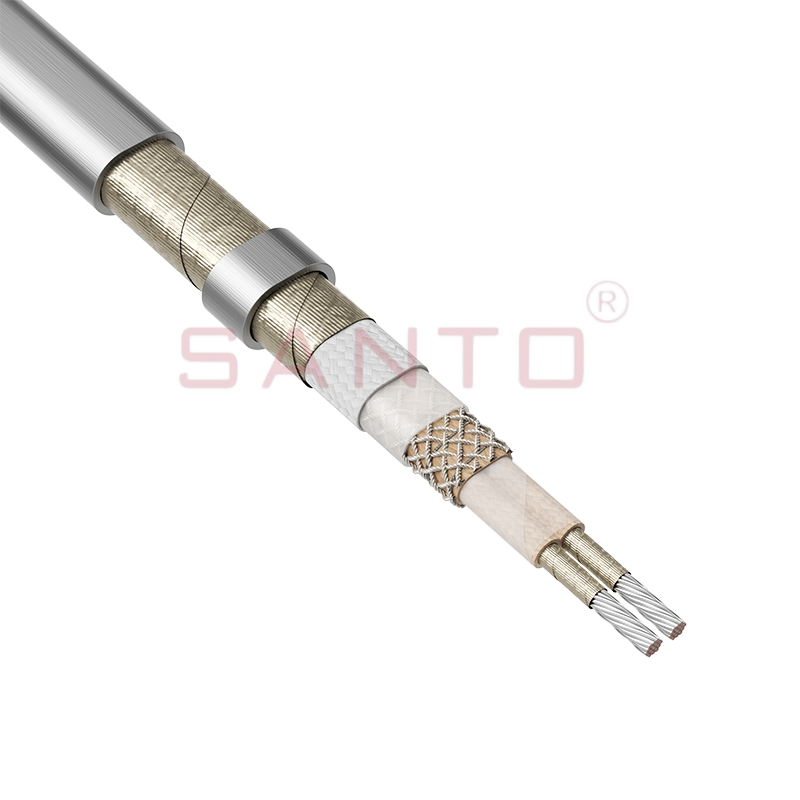
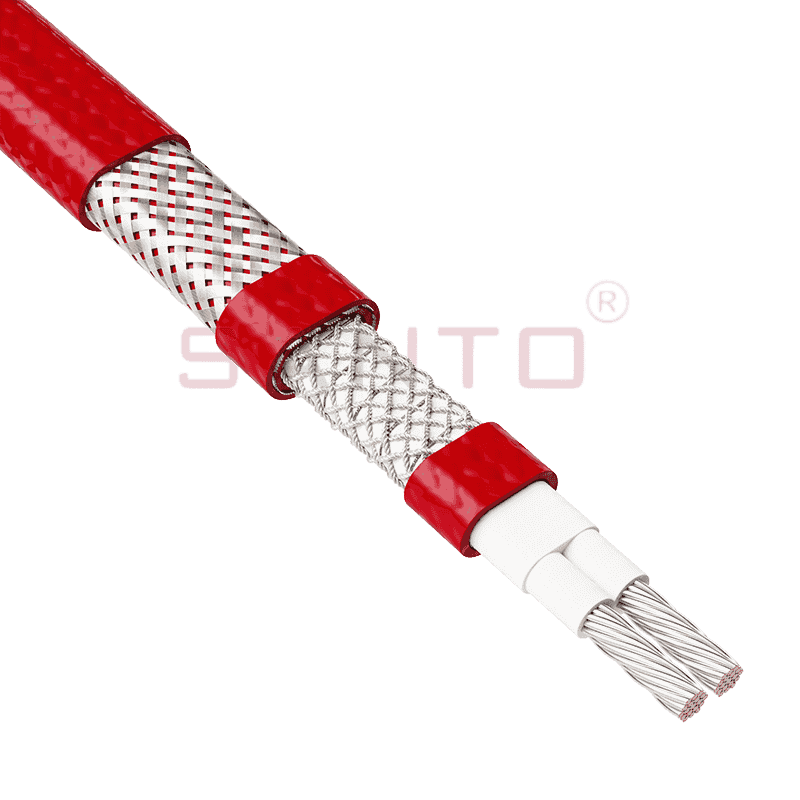
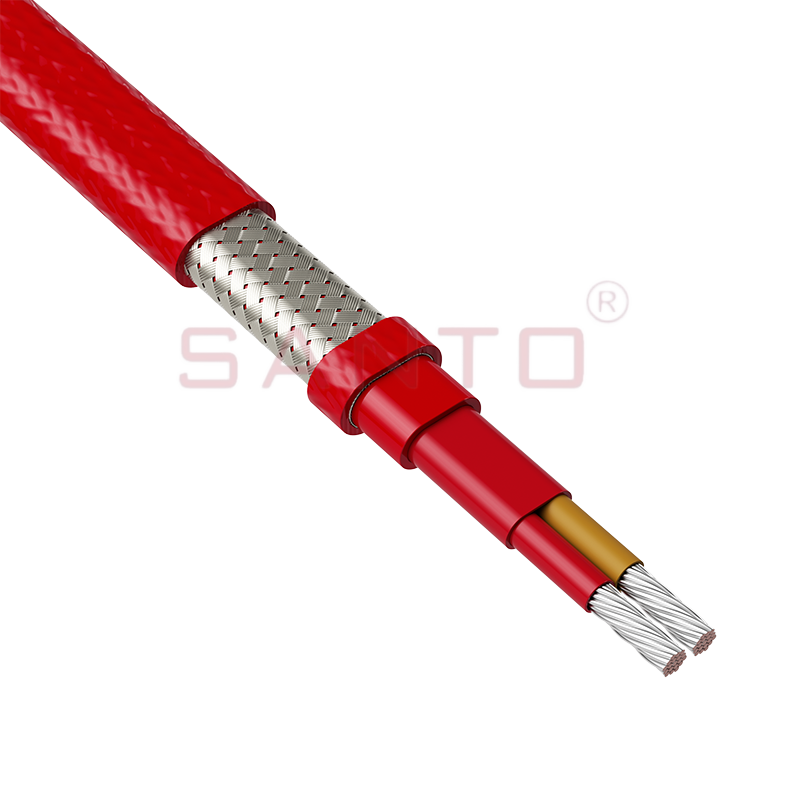
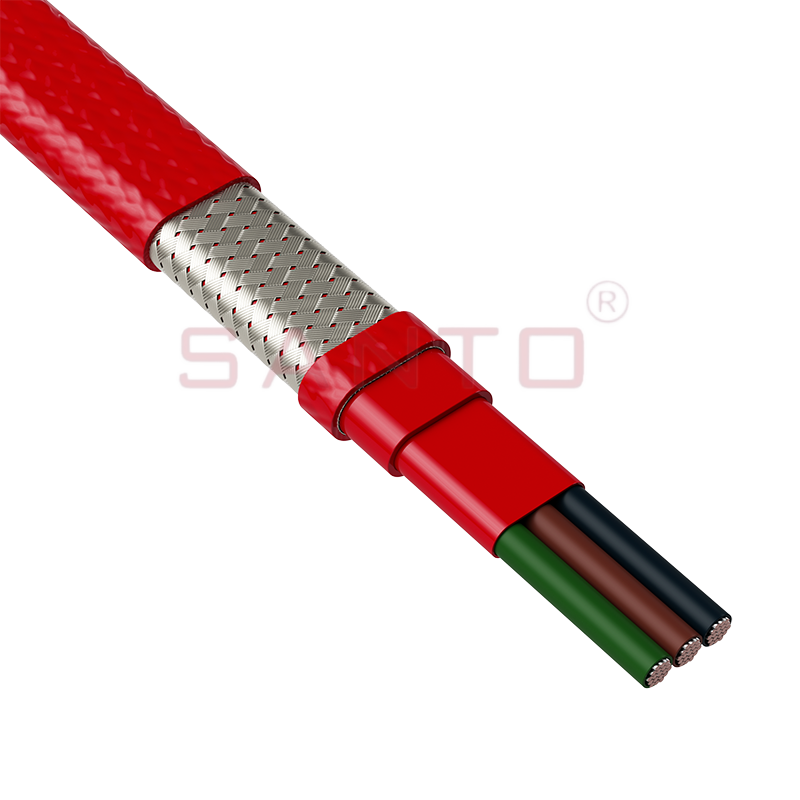
A self-regulating heating cable is the safest and most energy-efficient deicing technology for solar installations. Its polymer core changes resistance with temperature: the colder the surface, the more heat it produces; as ice melts and temperature rises, the cable automatically reduces output.
This behavior is important because a solar array often has warm spots near the center and cold spots at the edges. A constant-wattage cable would keep producing the same heat everywhere, making hot spots likely when snow shades one section while the sun heats another. A self-regulating cable will not overheat, even if sections overlap during installation.
Practical benefits include:
- Cut-to-length flexibility: the cable can be shortened in the field for each panel row.
- Overlap protection: self-limiting cable can be crossed without creating hot spots.
- Low power consumption: the cable only draws maximum power when it is actually cold.
- Weather resistance: a UV-resistant jacket is suitable for outdoor roofs.
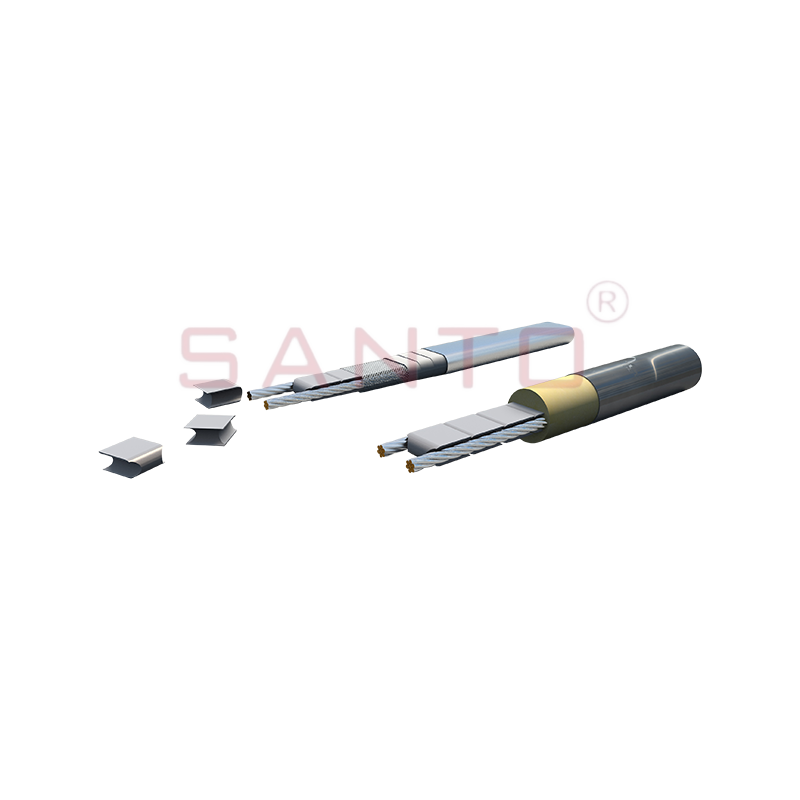
For a complete solar deicing setup that also protects roof edges and downspouts, a purpose-built eave-and-downspout system such as the UFM roof eave and downspout antifreeze system provides ready-to-install cable lengths, mounting clips and connection kits.
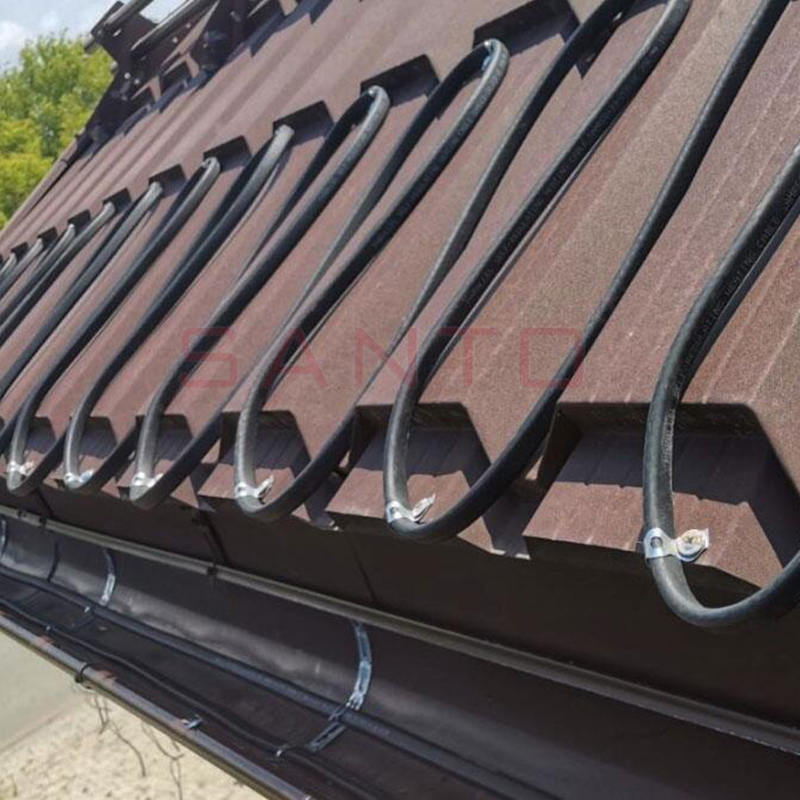 Custom UFM roof eaves and downpipe antifreeze system Manufacturers, Suppliers - Santo is a China OEM/ODM UFM roof eaves and downpipe antifreeze system manufacturers and UFM roof eaves and downpipe antifreeze system su...View Product →
How to Choose and Install a Solar Panel Deicing System
Start by measuring the panel array’s lower edge and the length of the gutters and downspouts that collect meltwater. One continuous cable run along the lower edge of each row is usually enough, but the exact length depends on how many panels share a drainage line.
Selection criteria
- Rated output around 30 W per meter for exposed roofs; 15 to 20 W per meter is often enough for protected panel edges.
- Maximum exposure temperature of at least 85°C to tolerate summer heat on a dark rooftop.
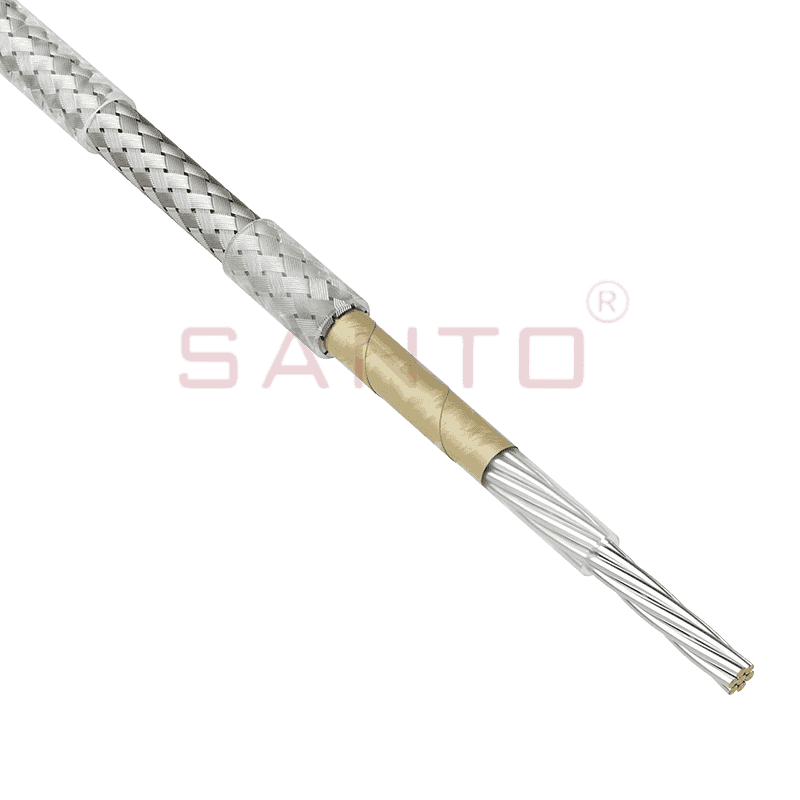
- Approval for outdoor and wet locations, with a grounded metal braid if local codes require it.
Installation steps
- Measure and cut the cable to the required length using the manufacturer’s instructions.
- Attach the cable along the panel frame or roof edge using UV-resistant clips; never place it directly on the glass.
- Run a loop into gutters and downspouts to keep the melt path open.
- Connect the cold lead to a temperature sensor and a controller set to activate near 0°C and deactivate above 5°C.
- Protect the electrical connection with a ground-fault circuit interrupter and weatherproof junction boxes.
If the same cable will also clear snow from a walkway or the ground around the array, the Santo-UFP self-regulating snow-melting cable is rated for outdoor ground use and can be buried in concrete or gravel.
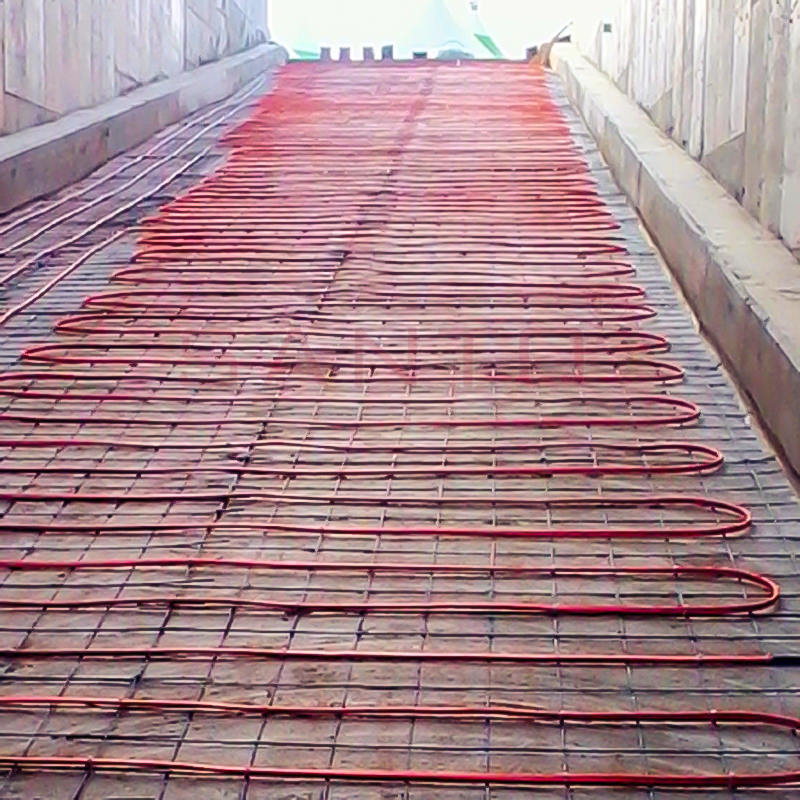 Custom SANTO UFP Self regulating heating and snow melting cable Manufacturers, SSanto is a China OEM/ODM SANTO UFP Self regulating heating and snow melting cable manufacturers and SANTO UFP Self regulating heating and...View Product →
Cost and Energy Trade-Offs You Should Know
Some owners worry that heating cables cancel out the energy that solar panels generate. In practice, a well-designed deicer runs only for a few hours before sunrise or during a storm. The cable on a typical residential array draws about 300 W, roughly the same as two refrigerator compressors. If it runs for 8 hours on a snowy day, it consumes 2.4 kWh. A snow-covered array can lose more than that in a single hour of lost solar production.
Consider a simple example:
| Scenario | Solar output that day | Deicer energy use | Net impact |
|---|---|---|---|
| No deicer, 5 cm snow | Near zero | 0 kWh | Lost 10–15 kWh of generation |
| Deicer runs 8 hours | 10–15 kWh | 2.4 kWh | Positive net gain |
In addition, the system protects against water damage caused by ice dams. A blocked downspout can force meltwater under roofing, which is more expensive to repair than the deicing cable’s energy cost.
Frequently Asked Questions About Solar Panel Deicers
Can I apply salt or chemical deicer to solar panels?
No. Salt and most chemical deicers can corrode aluminum frames, damage protective coatings, and contaminate the environment when washed off. Heating cable is the only deicer that leaves no chemical residue.
Will heating cables damage the panels themselves?
No, provided they are mounted on the frame or roof drain path rather than on the glass. The glass stays below the cable’s temperature, avoiding thermal shock.
Can I use a heating cable designed for water pipes on solar panels?
Not recommended. Pipe heating cable may lack a UV-resistant jacket and is not always rated for roof exposure. Use a cable specifically designed for rooftop snow melting.
How long does a solar panel deicer last?
A quality self-regulating cable typically lasts 15 to 20 years, and the UV jacket is rated for outdoor exposure. Thermostats and junction boxes should be inspected every winter.
Do I need a special thermostat?
Yes. A temperature sensor mounted on the roof activates the cable just above freezing and turns it off when ice is gone. A smart controller can also track weather forecasts.
Final Verdict
For solar panel owners in cold climates, the best deicer is a self-regulating electric heating system installed along the panel frame, gutters, and downspouts. It is safer than manual removal, cleaner than chemicals, and more energy-efficient than fixed-wattage alternatives. Choose a cable with a high-temperature rating, pair it with a proper thermostat, and you can keep the array producing through the worst winter weather.